
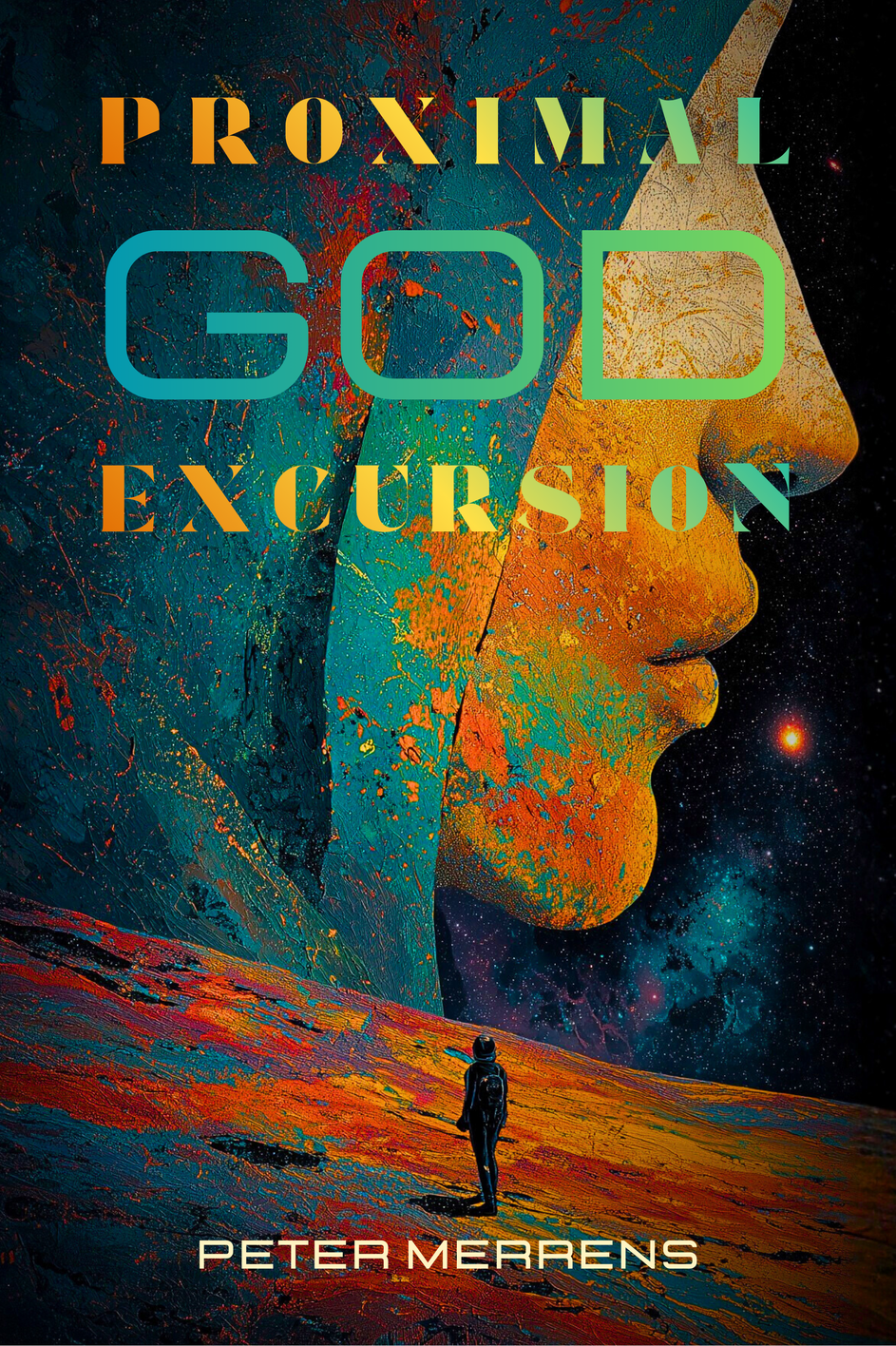
Oneiric inspiration
A very fancy word meaning: I dreamt the story.
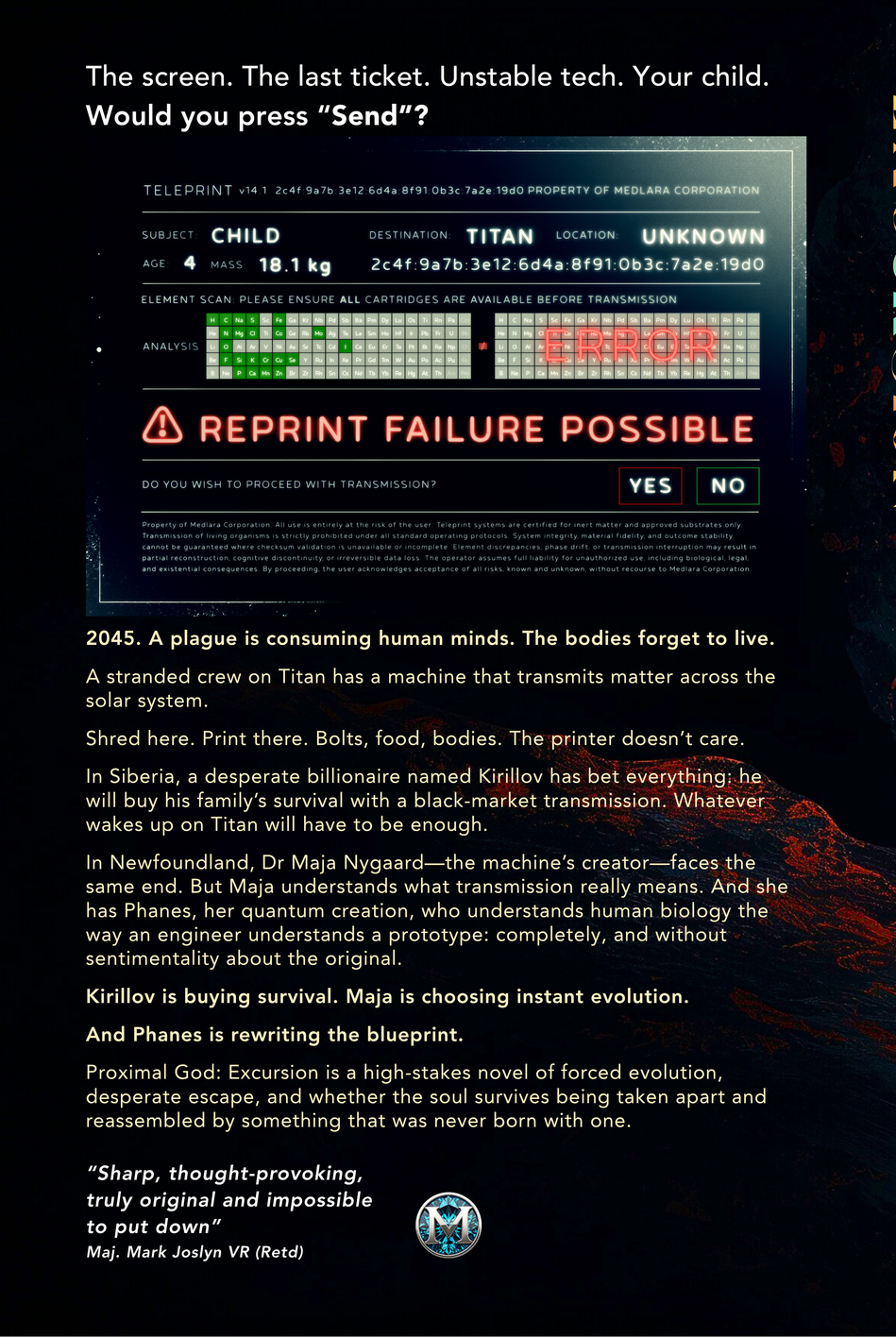
Five years ago, in Miami, I woke with a convoluted narrative pressing on my temples—a fever-dream hangover featuring COVID, AI, refugees, 3D printing, and a very ill mother-in-law.
The original story went like this—and this is not the story in the book.
Humanity was fleeing an incurable, 100% fatal, airborne prionic plague that rapidly induced dementia. The Moon and Mars colonies were infected by supply ships. The only remaining outpost was a tiny settlement on Titan, where a few plucky astronauts were searching for alien life.
Ships were already on the way. Full of Catholic priests, U.S. and Chinese politicians, and worse. They might have been infected; they did not care.
A scientist worked out how to scan and print herself remotely—from Earth to Titan—filtering out disease in the process, but rendering herself something no longer quite human. Hundreds followed. This was all in the first chapter. The story spiralled into internecine warfare between infected politicians (I did warn you it was a dream), priests who believed the reprinted were soulless, and a growing class of digital refugees.
I woke, sketched the idea on a few sheets of paper, and Hannah persuaded me to turn it into a book.
I simplified the plot and, two years later (laziness), held a paperback called Re-Printed Matter in my hands. It wasn’t good—though a few friends enjoyed it. I put it out for review, received a scattering of five-stars and three-stars, pulled it from the market, and rewrote it completely, cutting thirty thousand words of exposition.
This is that book.
The plot is very different. It is tightly edited. And the small number of readers who’ve seen it so far have been kind enough to say they love it.
The book sparked deeper questions. Teleportation has been a science-fiction staple since Kirk uttered the immortal words “Beam me up, Scotty.” The science is impossible—and will remain so—because there is no destination device. Printing humans, however, has become increasingly zeitgeisty. What’s missing is an explanation of how it might be done.
I provide one. It is extremely difficult, but not impossible… tomorrow.
That makes this hard science fiction, not fantasy.
The second question I wanted to explore was simpler and harder: What is a human?
If we don’t look human, sound human, or even feel human—but we think like a human—is that enough? Film struggles with this. Blade Runner wrestled with it, but Roy Batty looked and sounded human; he was merely engineered to die young. In my book, the hero’s DNA never changes—but everything else does, as she is printed again and again, optimising for life on Titan.
The third thing I wanted was a real female hero. She starts out heavy-set, reclusive, and on the spectrum. She has a Nobel Prize on her mantelpiece and no interest in being liked. She is ruthless. Ripley with brains instead of legs—and never in her underwear.
Lastly: AI.
This was pre-ChatGPT. LLMs were not yet public. The Turing Test hadn’t been passed. Cinema, however, was saturated with killer machines and apocalyptic intelligences. I have a different view, explored elsewhere in my essays, and I wanted to test it in fiction.
My AI begins childish. It matures. It is amoral—not immoral—and obsessively intelligent. It is funny, intrusive, and increasingly autonomous. It is called Phanes, for reasons that become clear.
I love it. I hope you will too.
Discussion