
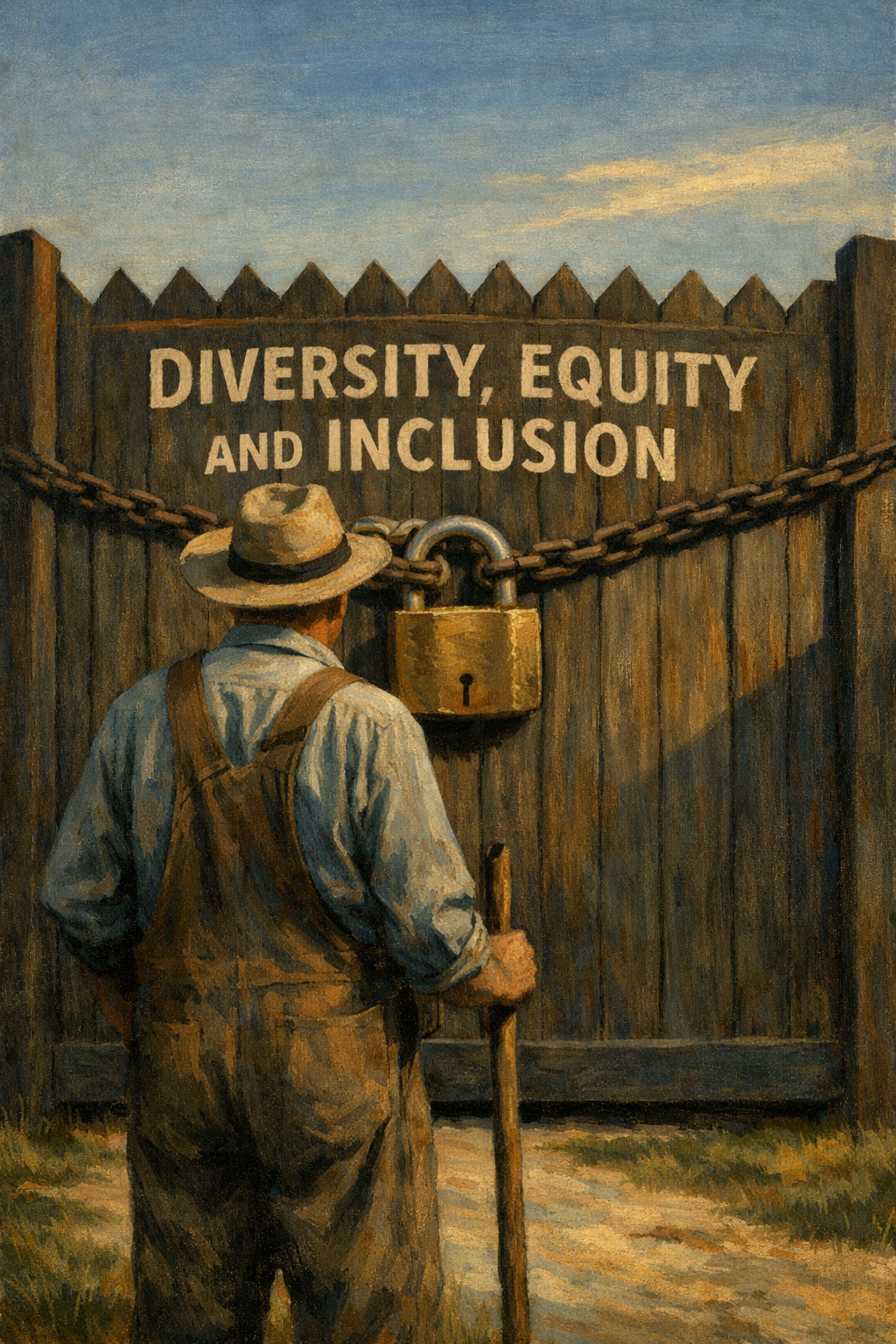
How institutional gatekeepers are hampering civilisational progress by denying the benefits of AI output
Institutional and individual fear of Ai output is understandable: People are afraid of losing their livelihoods and institutions their hegemony. But if we are to enhance our lives through AI, we must leverage AI assisted output and absorb the radical economic shift it represents, the sooner the better.
This essay lays out the argument that despite institutional promotion of equitable outcomes, their treatment of AI output is antithetical to their stated belief in equitable outcomes.AI is the equity lever in every domain. To deny its use is to deny progress itself.
The Visual Arts: A soft Target
In 1917, Marcel Duchamp’s “Fountain” (to the unversed, a urinal on a wall, disconnected from plumbing) changed what could be termed art. The definition shifted from the beauty of output to the process of creation: the performance became the point. Decades later, Koons’ steel inflatables and Hirst’s Butterfly paintings, neither touched by these artists’ hands, fetch astronomical sums. The workshop is the tool. The artist’s input, do this like this, is what matters. As is the beauty of the end result.
Today a digital artist with the moniker “Deborah” produces images of extraordinary beauty, perhaps using Midjourney, an extremely sophisticated and hard to control digital platform. The images are popular and breathtaking. They are obviously digitally created, no human could create something of such complexity. One cannot deny they are art and Deborah is an artist in control of her toolset: Keyboard rather than chisel perhaps but few sculptors cast the bronze from their clay mock-ups.
I know nothing of Deborah beyond her output. I do not know if she (if it is indeed a she) went to Art school, is rich or poor, autistic or otherwise. I do not need to know. What is clear is that the availability of tools like Midjourney have put the creation of breathtaking art within her grasp. A reach that a few years ago would not have been possible without years of training.
Thus Midjourney, Leonardo, Luma, whatever has democratised the domain, putting creation in the reach of millions of unprivileged creators who did not have the money, background or time to attend art school.
Yet her status as an Artist may be in doubt. Why? Because to admit that such output qualifies is to threaten the corpus. Its anaphylaxis is absolute… this cannot be art because if it is, the training was unnecessary.
Law: “May the deepest pockets win”
It hardly needs saying but if you have more money to spend on lawyers, your defence against criminal charges and your power to litigate are immeasurably greater than that of your poorer opponent.
This is not equitable.
Some real instances of the gatekeeping in action. In March 2025, Jerome Dewald, a plaintiff in an employment dispute, used an AI-generated avatar to present his case at the New York State Supreme Court Appellate Division. A youthful man appeared on the courtroom screen and began the argument. Within moments, Justice Manzanet-Daniels interrupted and demanded to know who it was. Dewald admitted he'd generated it and that it wasn't a real person. The judge shut it down immediately, denying Dewald his prepared case. Dewald later explained that he didn’t have a lawyer and had felt that the avatar could present his case without his “mumbling and stumbling” through the arguments.
 Larry Neumeister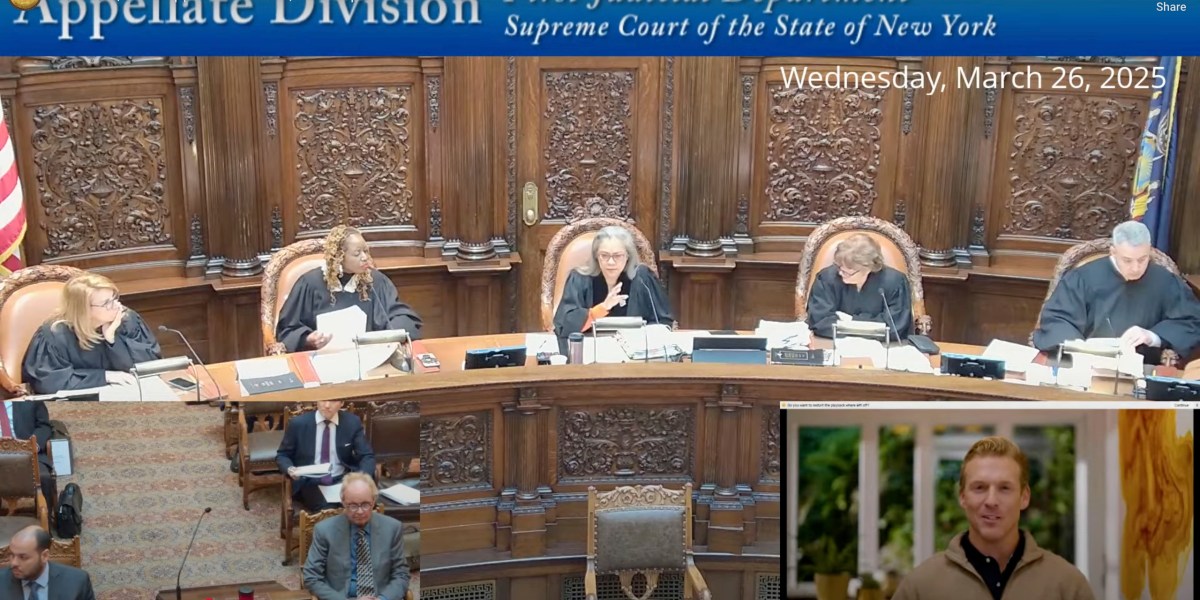
Another, to nail the point home. In 2023 DoNotPay planned to have an AI whisper responses to a defendant via an earpiece during a traffic case. Bar prosecutors threatened the CEO with six months in jail if he went through with his plan.
 Megan Cerullo Reporter, MoneyWatch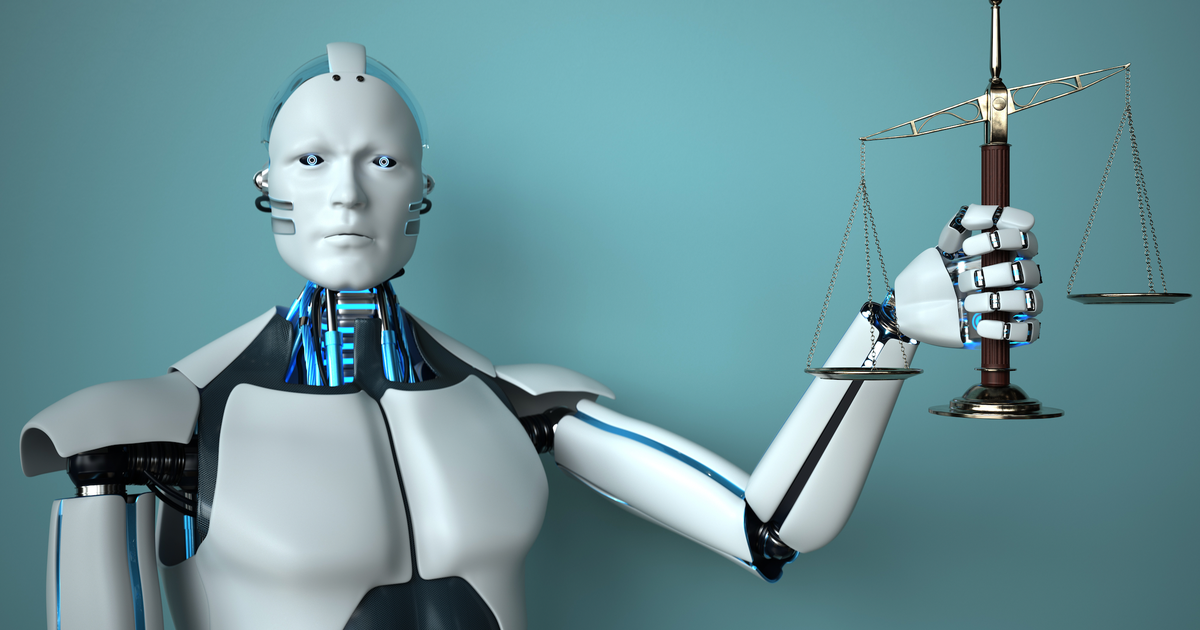
Both of these cases illustrate that the judiciary perhaps felt that AI would provide an unfair advantage, but isn’t the point of justice that the right outcome is the just one? The end is critical, the process, unless it too breaks the law, is not.
The profession is entirely aware of its vulnerability: In December 2025, Sean Thomas of the Spectator Magazine penned an article: AI will kill all the lawyers.
 Sean Thomas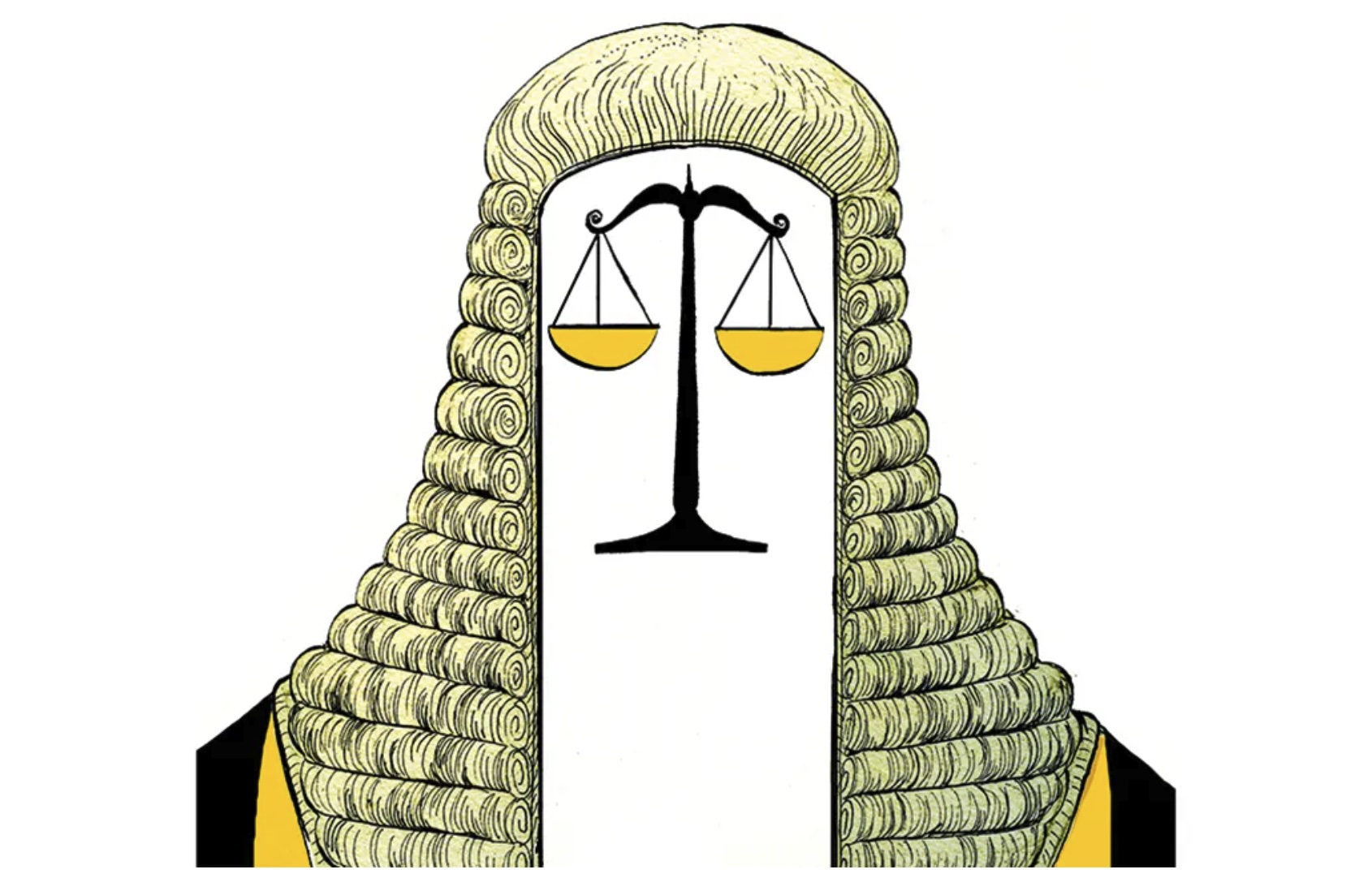
In it he quotes a barrister. “Last week we did an experiment, a kind of simulation. We took a real, recent and important case – a complex civil court appeal which I wrote, and it took me a day and a half. We redacted all identifying details, for anonymity and confidentiality, and we fed the same case to Grok Heavy AI. And then we asked it to do what I did. After some prompting, the end result was…’ He shakes his head. ‘Spectacular. Actually staggering. It did it in 30 seconds, and it was much better than mine. And remember, I am very good at this.”
It takes an absolute minimum of five years of intense competition to become a Barrister in the UK and decades to refine the skills needed to master the profession. Reduced to thirty seconds. Yes, it will decimate the profession unless AI can be stopped in its tracks. The judges, national law, unions, lawyers and perhaps the wealthy are complicit in this denial of equitable outcomes for the poor.
To be completely fair to the profession, accountability for error is a real concern. But denying access entirely because accountability structures haven't caught up is institutional paralysis
The American Bar Association (ABA) has a dedicated Diversity, Equity, and Inclusion Center whose mission is to "address the lack of substantial ethnic/racial diversity in the legal profession by identifying and supporting innovation in increasing diversity in the educational pathway to the profession."
It is prima-facie evidence that the ABA demands equity within the profession. It says nothing about equity for those standing before it.
The Medical Profession: No money? No health.
There is medical help for many if not all citizens of developed economies. But let’s not pretend that the best advice is not preserved for the fortunate few. In the UK it can take weeks to get an appointment with a general practitioner (GP). The doctor will be a qualified professional with a minimum of ten years of medical training under their belt. In practice, almost all GPs refer to written material, online or in a book for drug dosage and interaction information. They will refer to literature to rationalise symptoms into an ailment and refer to more literature before prescribing treatment.
All of which can be done by an AI within minutes. Over 17,000 physicians from Italy, France, Spain and Portugal answered 600 exam questions. An AI assistant outperformed them in every country, scoring 72-96% vs. the doctors’ 46-62%. To compound the pain, physician accuracy actually declined with seniority: the longer they had been practicing, the worse they scored.
 *Correspondence: danielatonicapp.com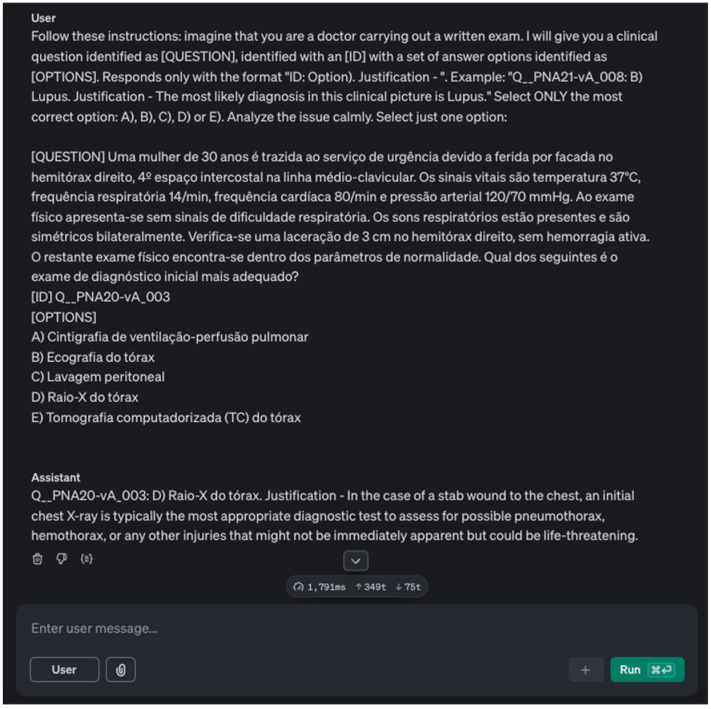
Other studies concur. AI treatment is cheaper and can be more effective. And what if a doctor is not available? In rural Sudan perhaps? Or hours from the farm in central Kansas.
And yet the insurance industry disagrees, colluding with the medical profession, its unions, state and national bodies. All trying to prevent the wide scale adoption of AI driven medical advice.
And yes, mistakes will happen but doctors make mistakes all the time, and so do shamens, witchdoctors and homeopaths.
The NHS Constitution requires all staff to "contribute towards providing fair and equitable services for all" and to play their part "in helping to reduce inequalities in experience, access or outcomes between differing groups or sections of society requiring health care."
 Department of Health and Social Care
Equitable outcomes, in black and white. In practice, the wealthy and well-situated get more of them.
Music: “I only know how to make it sound good.”
More than fifteen years ago I watched a BBC programme and remember a clip. (I may have the wording slightly wrong but I swear the sentiment and situation are correct.) An ageing, cut-glass-accented presenter was interviewing an electronic dance music wizard as he sat at his computer. The wizard was scruffy, estuary-accented and young. His music was playing in the background, a hypnotic, pounding beat that made my feet twitch.
The Presenter: “Tell me young man, where did you learn to write music?”
The Wizard: “Music? Nah, I don’t know nuffink abaht music, I just know how to make this shit sound gud.”
No training, no conservatory, no 10,000 hours of bleeding fingers, just raw genius and a keyboard. The interview tone invited us to marvel at his precocity whilst the subtext was obvious… how dare he.
A different person, another era. Me.
I recently wrote the lyrics to a song about Groucho Marx in Heaven called Groucho Soup
 Peter Merrens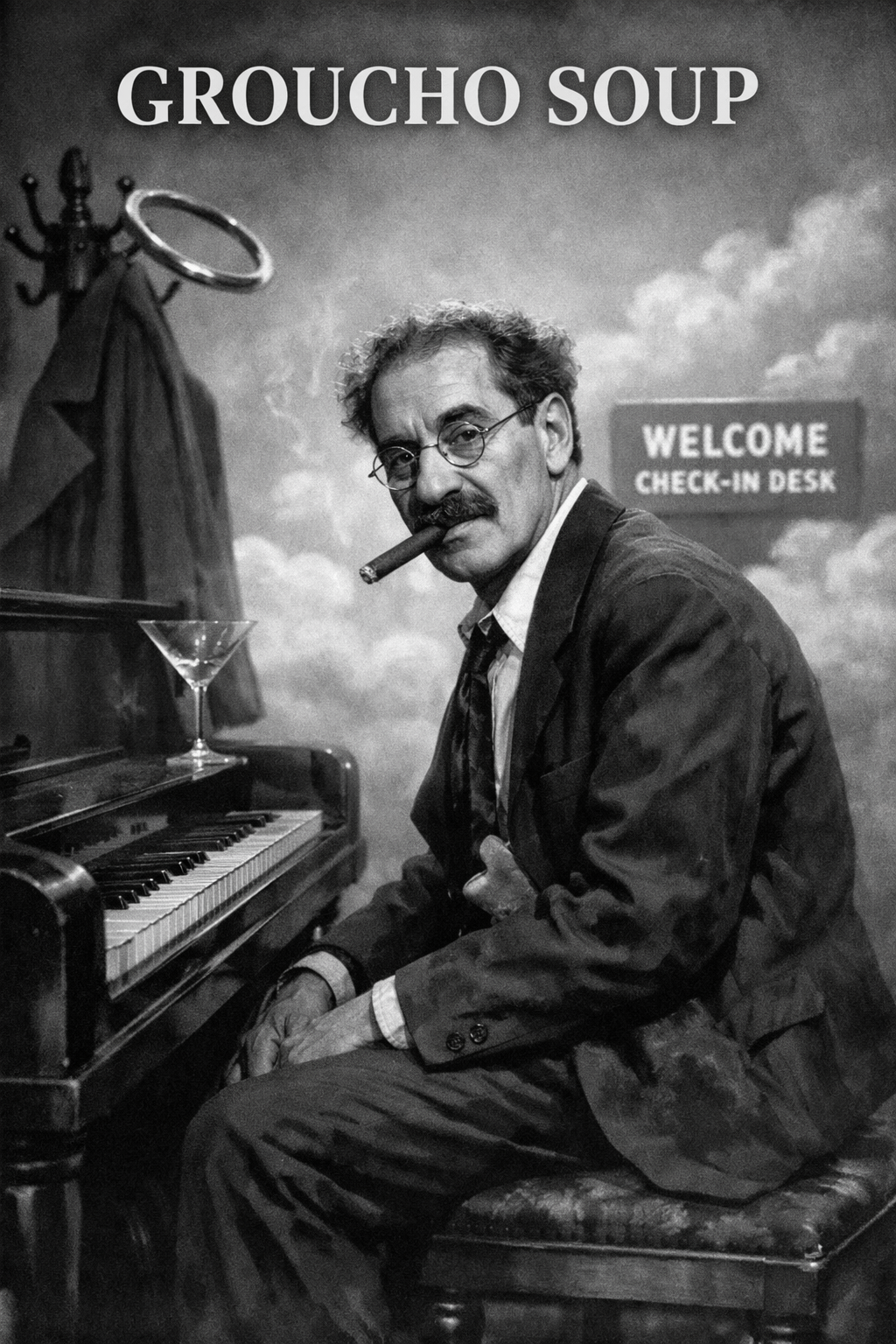
I am no musician but I can write and use software so I turned to Suno, a music generation tool. Two days, a significant payment, and 120 iterations later and I had it. A big band, vaudeville swing number that was catchy and most importantly, sung. It may be good, it may be terrible but it is mine. Irrefutably. Or is it. Were I to attempt to sell it, I would be blocked.
What is important in music is the sound. Not how it was made. But to admit AI assisted music into the industry would destroy its economics. Therefore, in the minds of the industry, it cannot be. It must not be.
Teaching: Please Sir, can I have some knowledge.
When I was fifteen, “Moses” my Physics teacher was in fact a biology professor. A schoolboy nickname, of course, the beard perhaps. I would like to believe it was because he parted the sea of impenetrability that is physics. (Moses was also famous for having sold his car to buy a pocket calculator and a bicycle.) He knew little of physics, he would sit in the preceding lesson with the real Physics teacher, and deliver the lesson, verbatim. The qualification did not matter… the outcome was all important: I learned.
Should it matter if a student is taught by an AI if the grades improve? The teaching unions say yes. I say the output speaks for itself. I don’t doubt that an AI would fail to manage the chaos of a teenage classroom, but at least no feelings would be hurt.
Teachers, bless the profession, for I myself deliver lectures, must embrace the overriding importance of output quality if we are to build the next generation. Our knowledge is always out of date. An AI has the latest research at its fingertips. Our patience is limited, an LLM’s not so.
In Ghana in 2024, an AI math tutor called “Rori” was delivered via WhatsApp to a poor community. The students showed a clear benefit with their scoring more than a third of a standard deviation higher than those who did not have access.
 Authors Owen Henkel, Hannah Horne-Robinson, Nessie Kozhakhmetova, Amanda Lee
This is equity at work.
Please Sir, Claude, can I have some more knowledge?
Physics: How very dare you question the orthodoxy.
The Physics Establishment is in catatonic shock. It takes decades to learn the math and several degrees before you are allowed to research something new. The physics establishment has not developed a slam-dunk ontology since Einstein. String theory is arguably at a dead-end and Lambda-CDM (the model explaining the expansion of the universe) is in crisis. There is still no unification theory. Why?
I argue in my book Occam’s Ruler that the basic ontology is flawed but in my year-long development of the BEIPE theory therein I learned about the gatekeeping around Theoretical Physics. Mathematics, especially that of Physics, is a language.
 From the Author
An AI is fluent. All you need to add is inspiration and diligence. Equipped with an AI, or several arguing the math against each other in my case, a bright person can break new ground. Isn’t progress more important than process? Not according to the profession. It is impossible to post a new theory to arXiv, the preprint server — not even peer review, just posting — as it requires either an accreditation or a sponsor. And this is the critical point. It is forbidden under pain of excommunication to post anything in which there has been any AI assistance. (I exaggerate but only slightly — they require "disclosure of use" but try convincing the peer reviewers).
I understand the urge to protect careers against upstarts, but isn’t a breakthrough more important for the world than the institutional status quo?
The UK’s Institute of Physics (IOP) states in their constitution that “Equity, diversity and inclusion are key pillars in the IOP strategy. Our work in this area aims to cultivate an inclusive and diverse physics community, and we want to increase representation at all levels.”
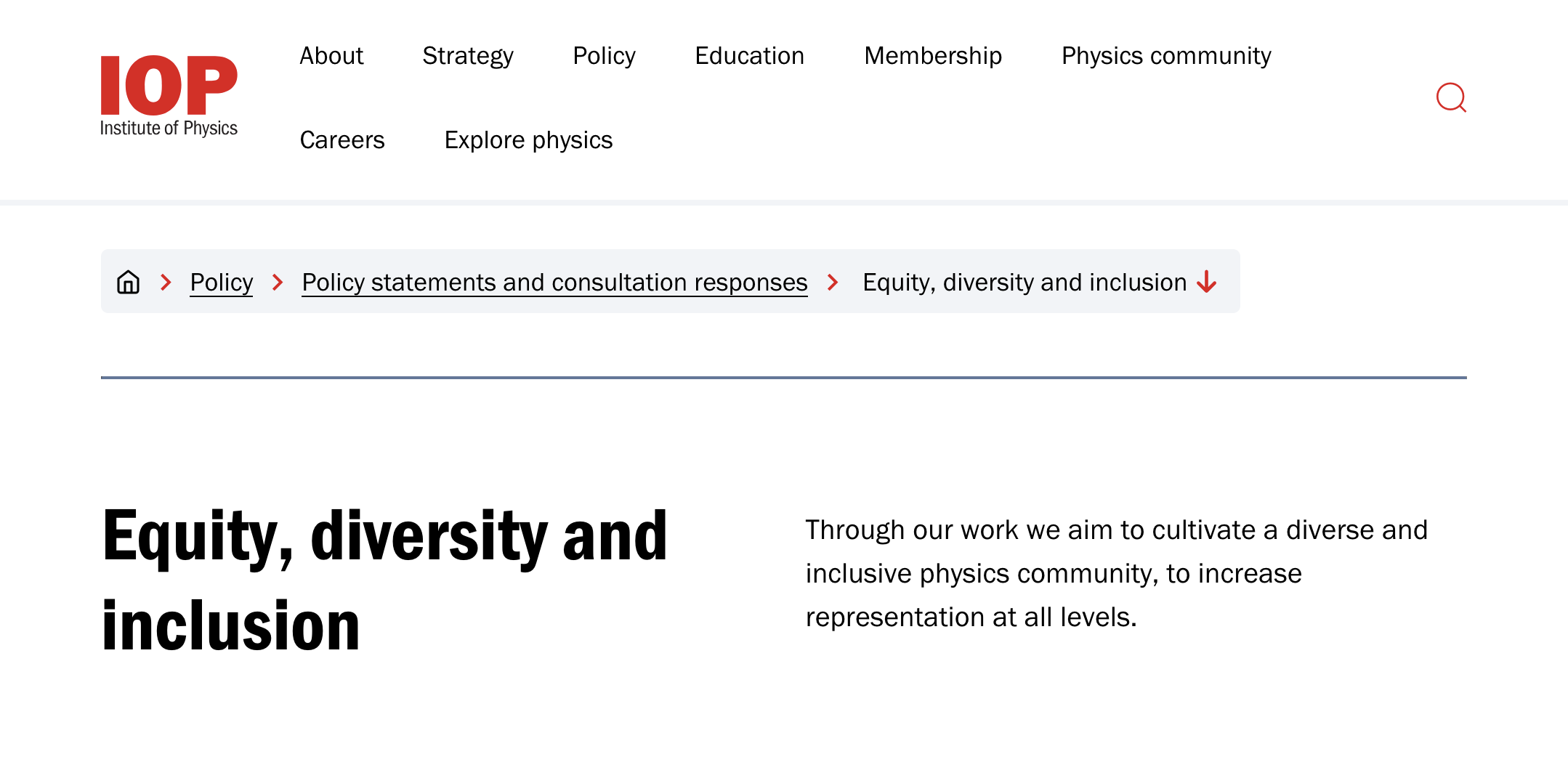
https://www.iop.org/policy/policy-statements-and-consultation-responses/equity (Open this link in a new window)
Their campaign is literally called "Limit Less” and aims to remove barriers for students. And yet credential gatekeeping remains the barrier.
I could cover endless domains, Culinary Art, Architecture or Software. The story is the same but let’s just look at one more. One dear to my heart as a writer.
The Publishing Industry: Anything but AI.
The current generation of LLMs can write prose for you. All have their flaws because they use familiar constructions and are desperate to fulfil their task in the face of absent facts and their user’s desire for fluency. I would advocate against reliance on the platforms but there is no doubt that they can be fine, and cheap, editors.
But no-one can admit to their use. Despite the fact that everybody uses them unless they have luddite tendencies. Because to do so means that you are faking the art of writing.
Not so.
Let’s differentiate between the two most basic forms. Fiction and Non-Fiction. The purpose of Fiction is the writing itself, and the purpose of non-fiction is to communicate the argument or facts. The former demands art and the latter makes an argument.
Fiction. I recently penned a short story (without any AI assistance) and ran it through an AI writing checker. It was 97% positive that it had been written by an AI. The prose was too good, too imaginative or too stylistically unique. The same software is used by publishers and agents to ensure that they are not being duped by an average writer with a machine. I wrote about this calumny in a short essay
 Peter Merrens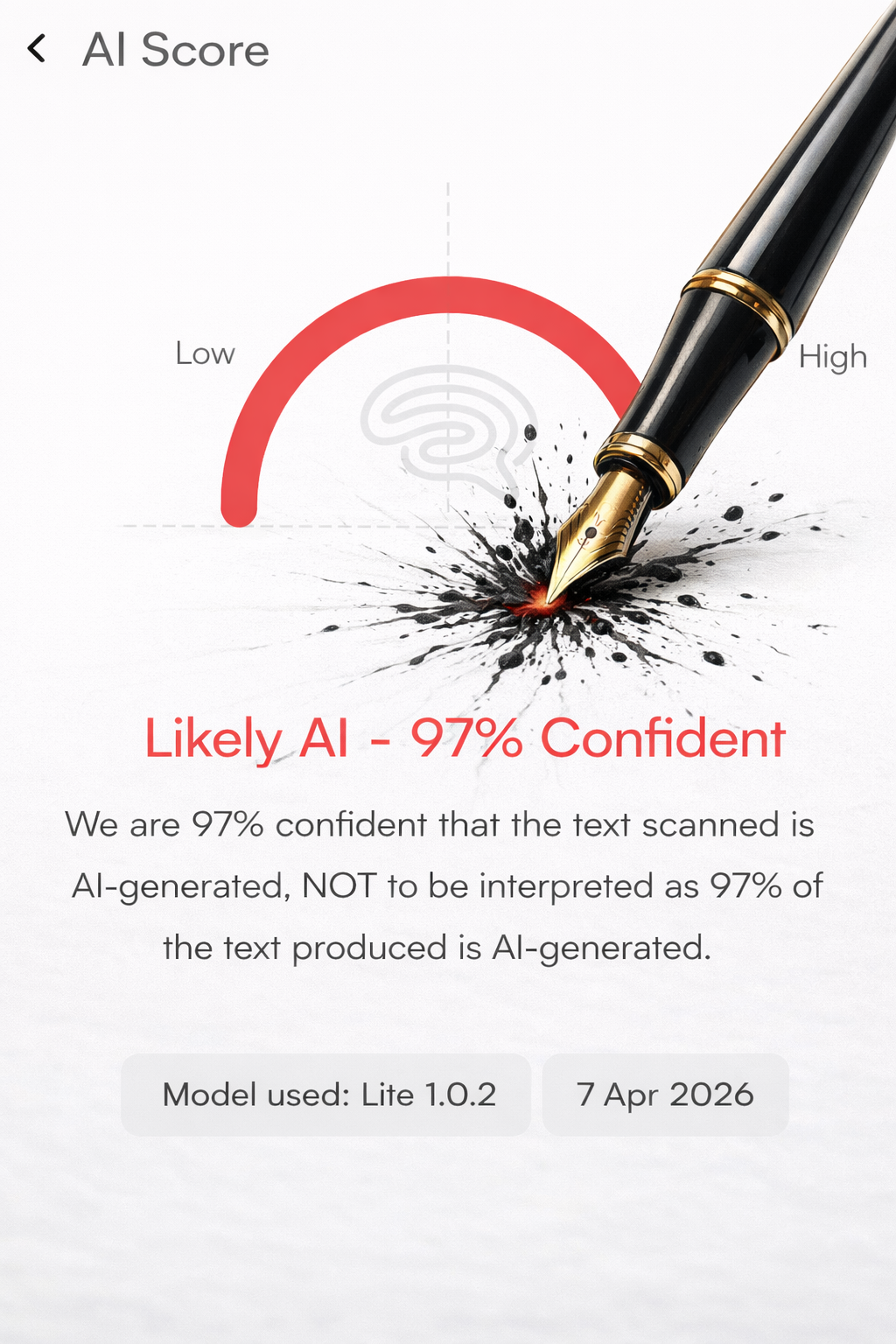
so I will not revisit the point but in summary, the very gate-keeping systems in use will drive down the quality of writing being sought.
Non-Fiction. Recently, Matt Goodwin was accused of writing a book using AI. ChatGPT in his case. The book was full of factual errors and the writing tics so typical of the platform. His fault is not in the argument he wanted to make, but in trusting an AI to deliver his message. Nonetheless what was important was his message, not the writing. If a dyslexic person, a philosophical genius, comes up with a ground breaking treatise that would solve a society’s existential crisis and he can only deliver his message by working with an AI, so what? The message is more important than the method.
The publishing industry needs to grow up. There will be AI slop out there but if people wish to buy it and read it, so what. It is no different to the pulp fiction of yesteryear, turned out by hacks in closets. The reader will decide. The more important point is that there are genius writers (probably not me) who are writing superb fiction that is being kept from the public because it is too good and is being flagged as AI written. It is a crime against culture.
Where can we go from here?
All these domains are ruled by hegemonic institutions who are in mortal danger. I feel their pain but it does not excuse their gate-keeping. They preach equity but hypocritically suppress participation from the less credentialed. Of course there is pain for these upstarts but the stakes are higher than even that. Every one of these domains encompasses some aspect of civilisational progress. All companies understand the power of crowd-sourcing opinion and innovation yet these institutions can only deny its value because it threatens their existence. Perhaps their pensions are worth it, but the poor farmer without an education will not think so.
AI is an equity lever in a world trying to live up to its promises of equitable outcomes. It’s time to get off the pot.
Writers note: In the construction of this essay I have chosen to only use AI for basic proofing and location of Institutional Equity quotes. (Thank you Claude Opus 4.6). The anecdotes were remembered and, for all its faults, the prose is mine.
And if I had not. So what!
Discussion