
A flood of AI written slop is drowning the publishing industry. True, I believe, but I have not experienced it myself. I listened patiently to a fellow writer as he, with earnest expression, explained how the seventh novel he had completed in the last six months had sold over a thousand copies. “…genre…?” I asked. Military sci-fi, came the answer. Mmm, interesting, I murmured.
The slop tide has given rise to its own bot army of Ai writing detectors. Let’s pick on originality.ai because it touts itself as “The Most Accurate AI Detector”
I recently wrote a short horror story called A Child’s Breath.
 Peter Merrens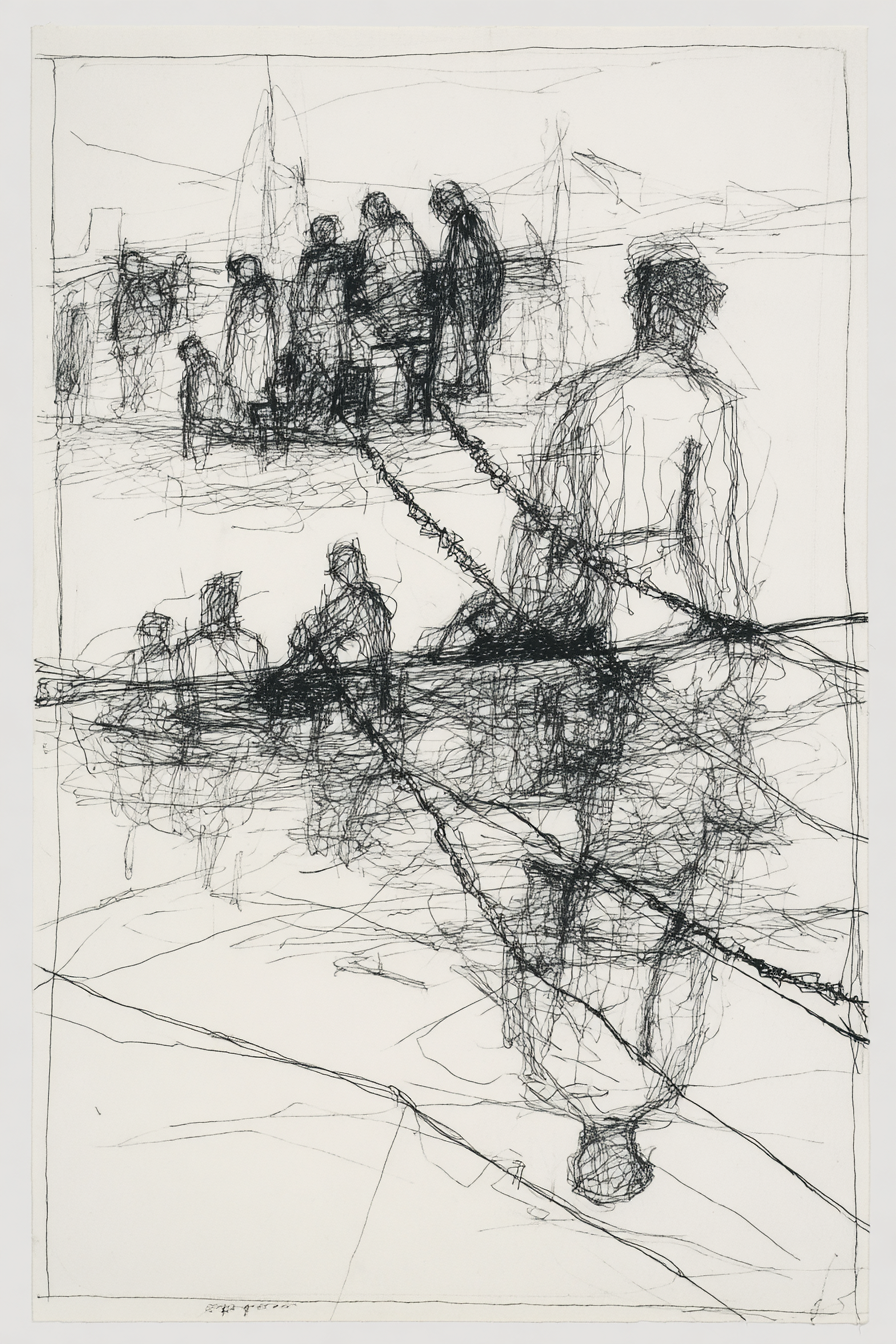
500 odd words, a perfect test case. It is one hundred percent written by me. More than one hundred percent because I had to uncorrect autocorrect and add the "l" to the word "mewl", it kept removing — The ghost mewing might have been more fun, but it broke the atmosphere.
I paid thirty pounds for enough tokens: research having its price, you understand.
Here are the results.
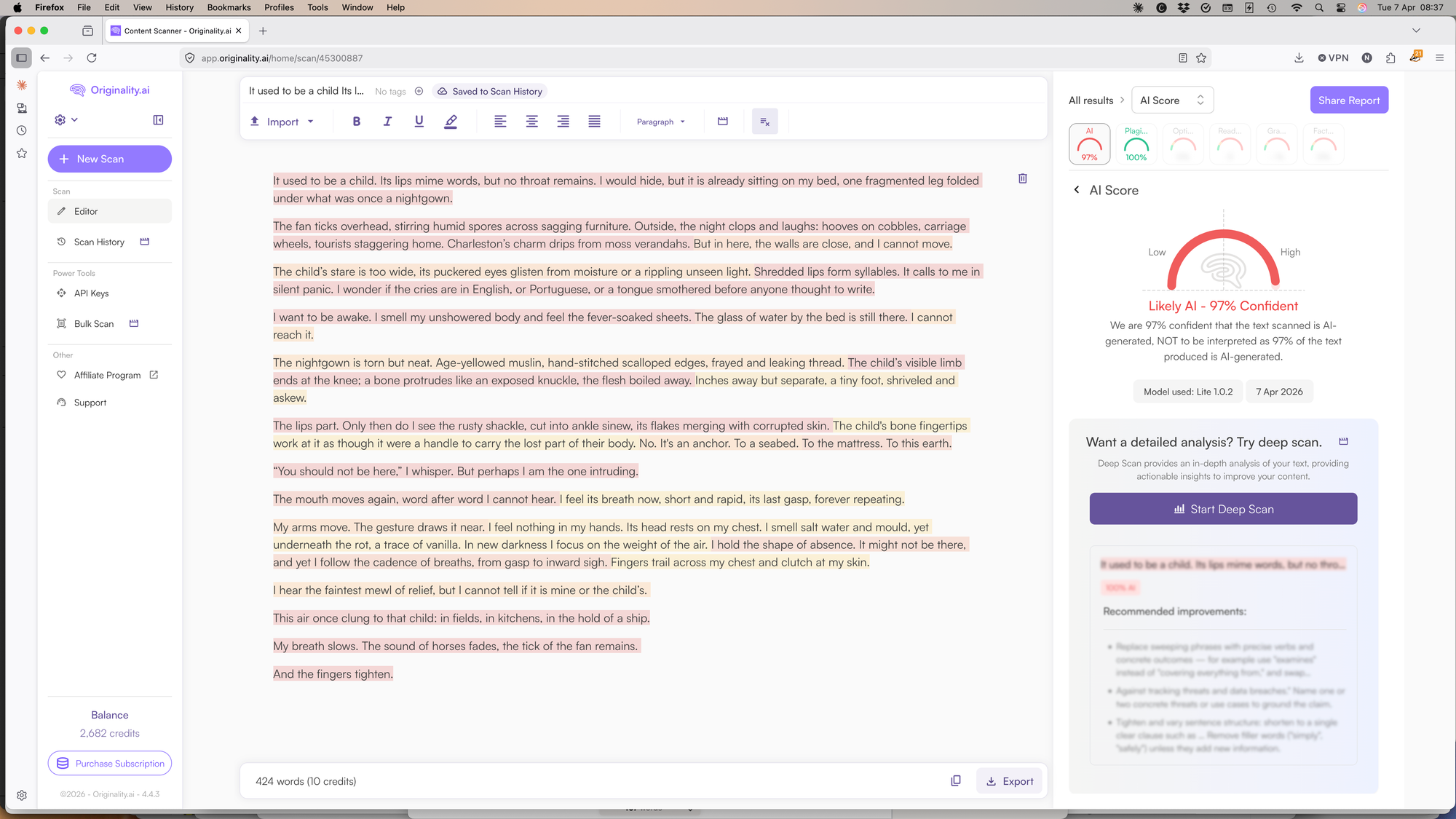
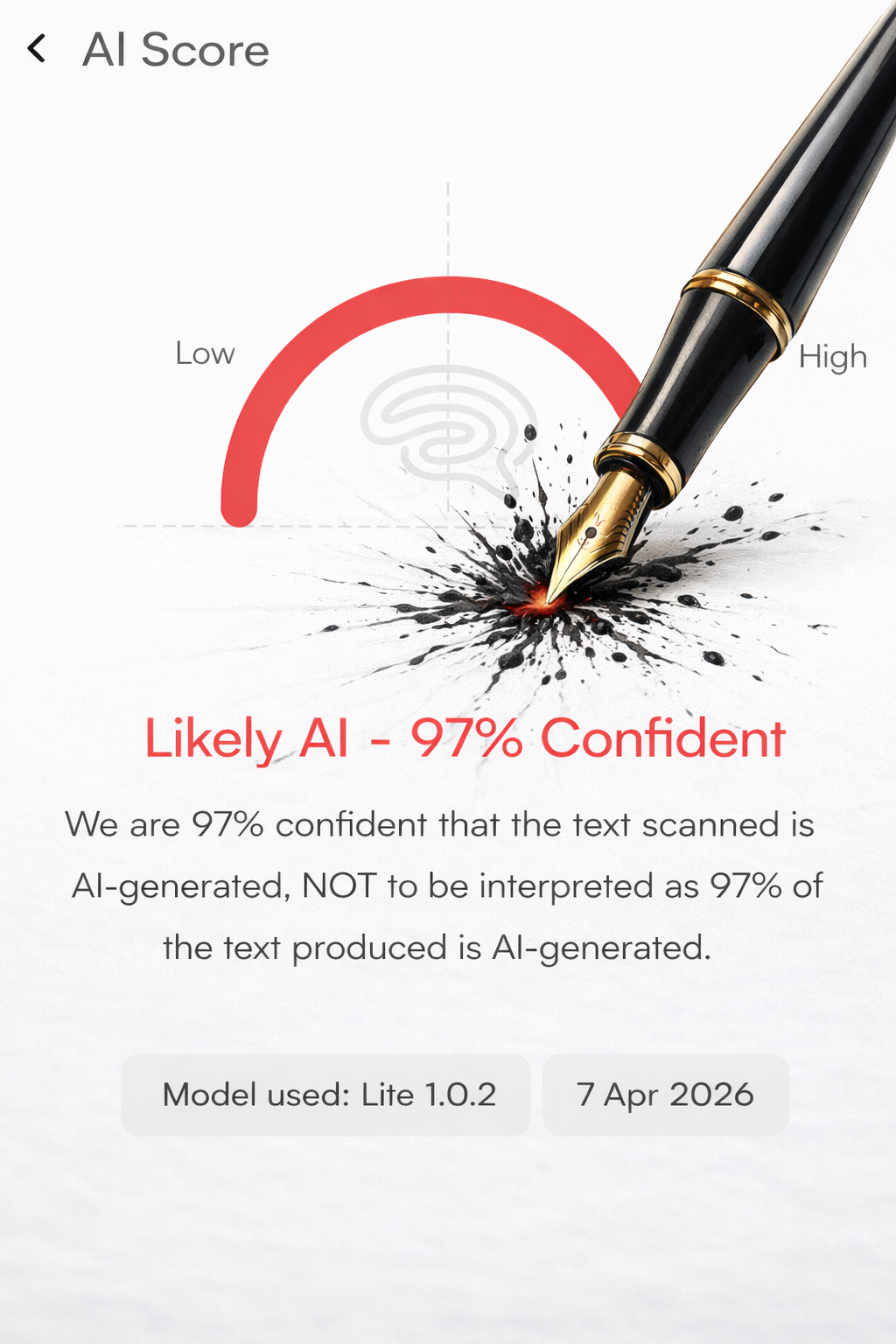
Originality.ai was 97% sure that my text had been AI generated. It is quick to point out that this does not mean that 97% of the text is written by AI, although I note that there is no green highlighted text on the page.
I was distressed. What am I doing wrong? Is my phrasing too unoriginal? Too patterny, perhaps? I strive to compress my writing, eschewing conjunctions to create discordant harmony within a sentence, especially in a flash piece like this one of 424 words. (For the lovers of language this omission technique has a name: asyndeton.)
“Want a detailed analysis? Try a deep scan.” I did. The scan vivisected my prose, without anaesthetic.
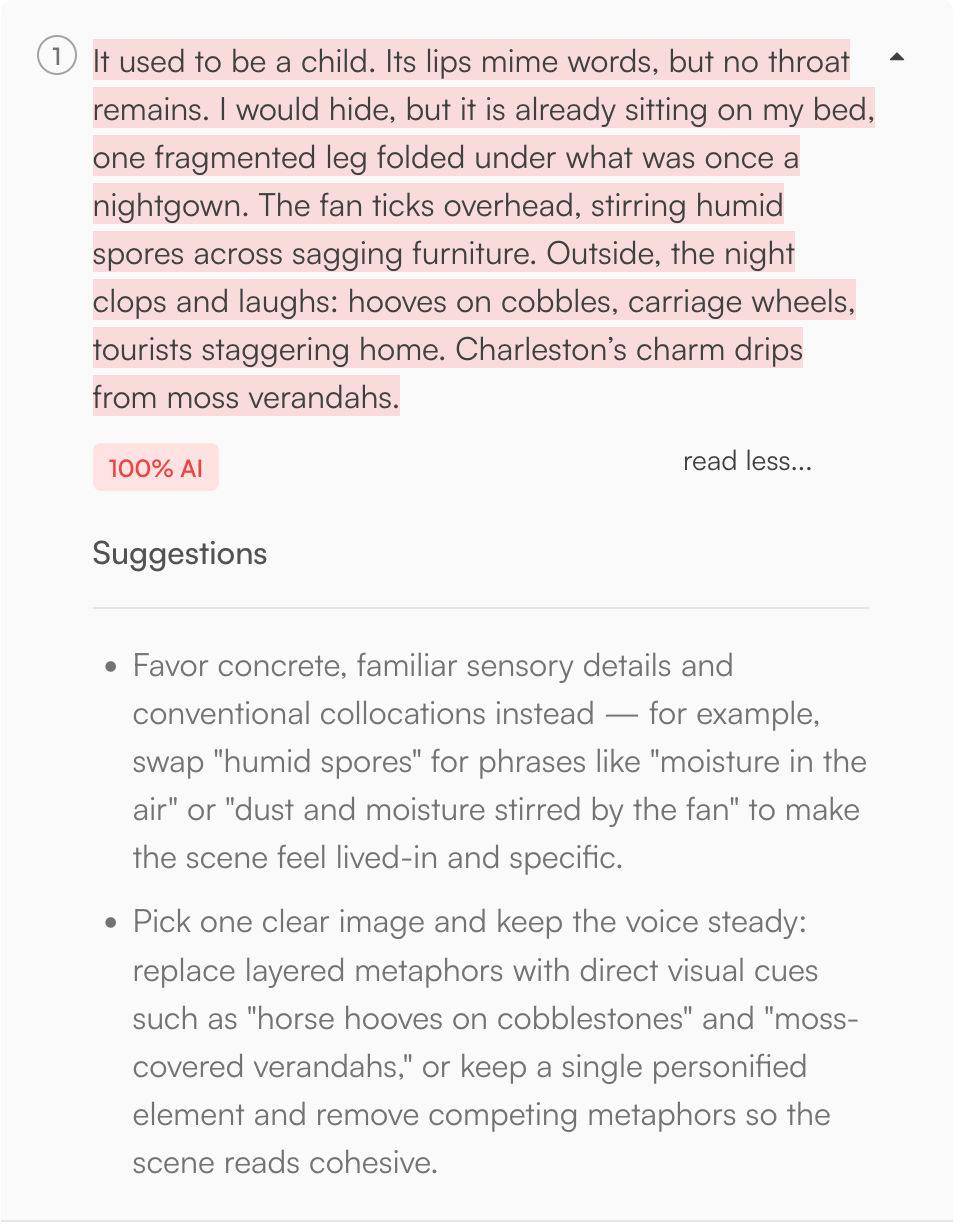
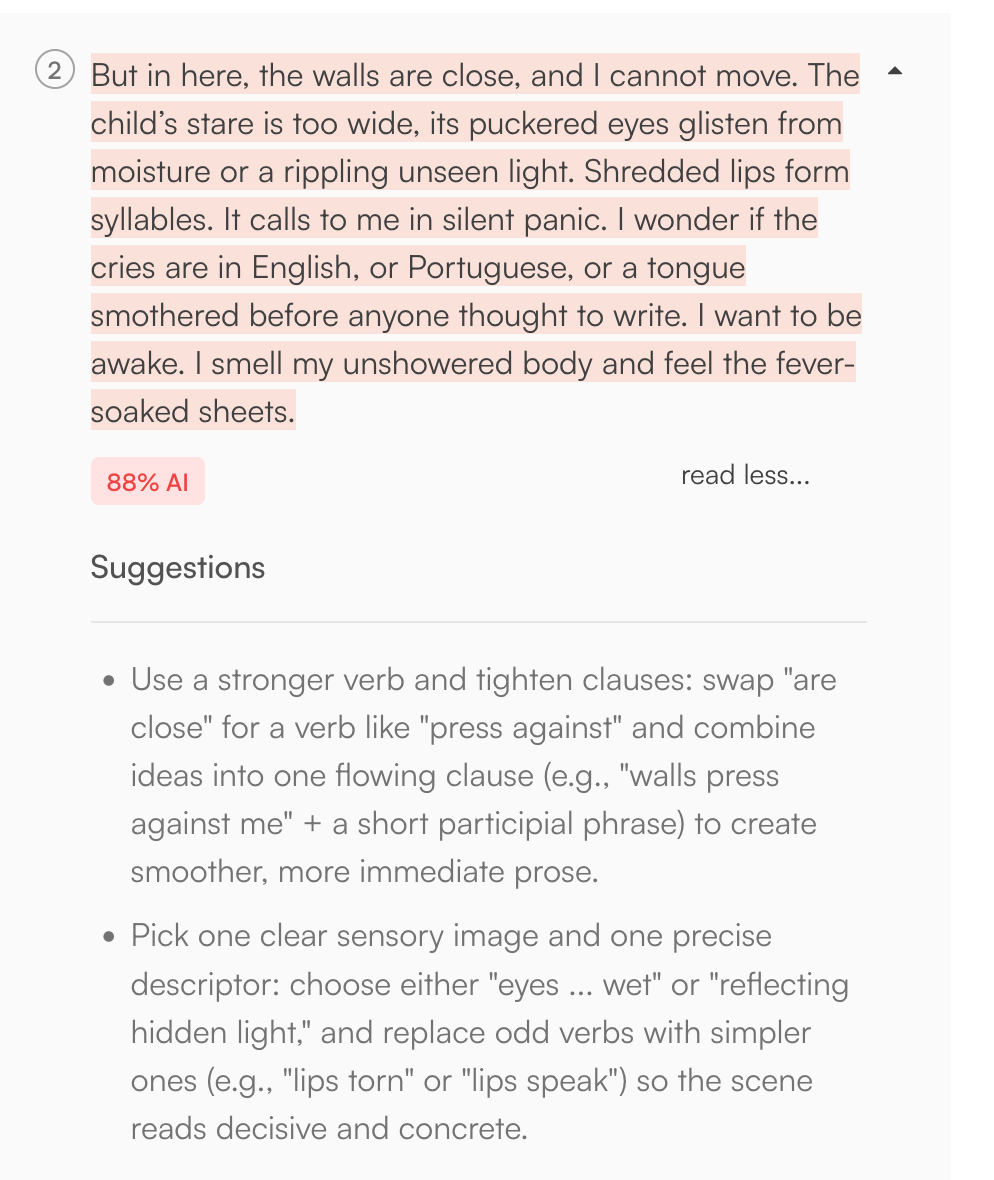
Now I was capital-P Pissed-off.
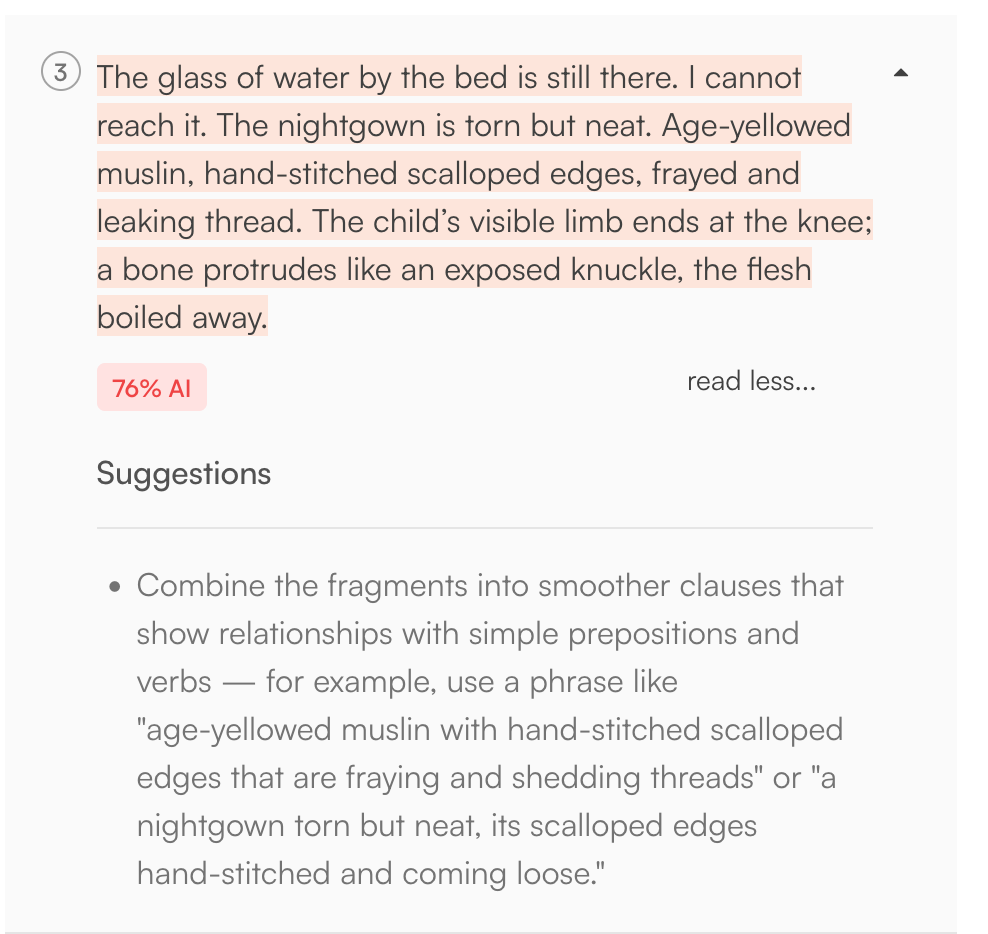
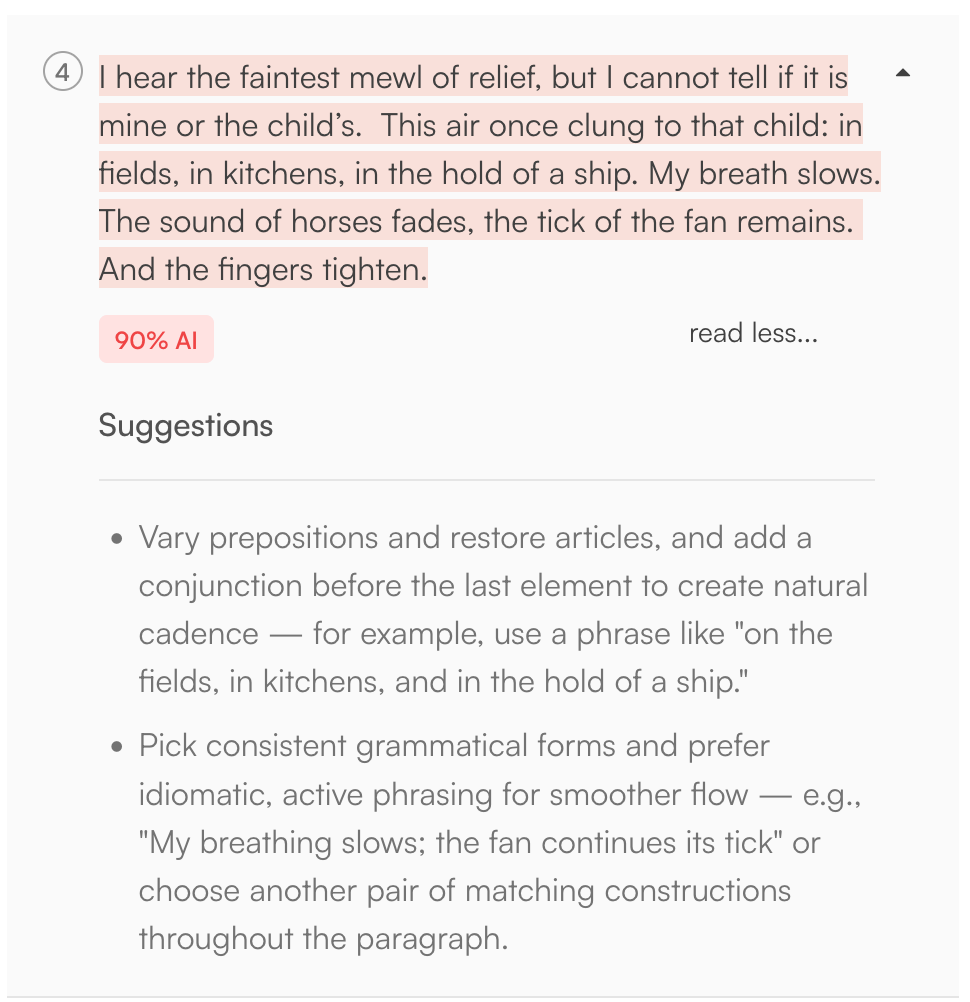
In other words, to make my prose look as though it is not written by AI, I have to dumb it down, smooth it out, make it read more like a corporate document or an eager thirteen year old’s output.
Enough of the test case.
The model designed to detect bland slop is identifying anything that has texture and suggesting that you put it in a blender.
This is happening because it is trained on bland writing from corporate brochures and goodness knows what else. The danger is that these tools are now a silent, irrefutable gatekeeper being used by institutions. For writers, this is terrifying. Imagine if I had submitted my Child’s Breath story to a renowned anthology looking for flash fiction in the spirit of Toni Morrison’s Beloved. I might have had high expectations. Instead, a filtering machine, like Originality.ai, never mentioned or credited would have destroyed my chances. No right of redress, my reputation with the journal and all involved would have been in tatters. It would have damaged my career.
How ironic that they should use AI to destroy reputations AND writing.
The tidal wave of AI generated work must be dammed (or damned, thank you autocorrect).
Perhaps this is a teething period, but I don’t believe so. This is another nail in the coffin of an industry. Once literary agents are disintermediated by Agentic AI sorters (stop arguing, there is no point, it will happen), publishers will be using tools like Originality.ai to make sure they are working with a real talent, as opposed to a capable technologist. How on earth is any mistake-free manuscript with original syntax going to penetrate?
I already eschew em-dashes, having rather liked their construction — a handy-dandy multitool of pause and separation — I realised that people thought that an em-dash automatically indicated AI generation. (Screw you, Originality.ai, I like em-dashes.)
AI in writing is essential.
The traditional publishing industry is an empire of editing. In order of intervention intensity we have ghost writers, developmental or structural editors, line editors, copy editors and proof readers. A celebrity will use them all. A poor independent author will use none — although she should.
No one believes that MC CatMcCattyCAT (I pray that is bizarre enough to keep me out of trouble) wrote her own autobiography in-between fat-jabs and butt-lifts, no-one. But no-one admits that it was written by a ghost-writer. Should it be banned? Should she be cancelled?
AI is an editing multi-tool. Editors cost a fortune, the best add value but are beyond the financial reach of independent (not vanity) publishers. For a writer, AI democratises the art. Telling me where I have been too purple in my prose, is useful, but it is up to me whether I maintain the imperial tone.
AI can help with a rhyme and save a half-hour of thumbing through a rhyming dictionary that is never to hand. Claude, what words rhyme with virgin.
And if I have rewritten a paragraph three times and it is still tortuous, and a LLM says, try this… it is clearer. What on earth is the harm in that?
Most importantly, authorship is, except for professional hermitage, arguably the loneliest profession in the world. An AI provides a simulacrum of companionship: convincing enough to keep the pangs of seclusion at bay.
And one cannot avoid it without explicitly cutting off parts of the tools we use. Every word processor has an inbuilt AI. Far worse perhaps is autocorrect which singlehandedly causes more errors in my work than any other phenomenon.
The ghost mewed.
Discussion