

With Steven Spielberg’s Disclosure Day—its trailer freshly released and promising that “all will be disclosed”—the UFO subject is once again surging toward mainstream fashion. It always does. Each cycle arrives with the same assurances: that this time the truth will finally surface, that secrecy is about to crack, that skepticism will be humiliated and belief vindicated. Silence is reinterpreted as anticipation; ambiguity becomes evidence.

Before that noise returns in full, it is worth setting down a position that is unlikely to trend but may prove more durable. This is not an argument about what UFOs are. It is an argument about how UFO phenomenology forms, how explanation behaves under pressure, and why the subject persists even as individual mysteries repeatedly collapse.
A crucial distinction must be made at the outset, because most confusion in this domain arises from its absence. To say that something exists is an ontological claim. To say that something explains an observation is an explanatory claim. To say that something belongs in the solution space is neither. This essay operates almost entirely in that third register. Identifying what cannot be ruled out is not belief. Mapping admissible explanations is not endorsement. Refusing premature closure is not credulity.
The least-assumptive explanation for UFO phenomenology is not a single cause, but a braid of human systems under stress. Militaries pursue leverage. They always have. After the SR-71 Blackbird, long-dwell extra-atmospheric platforms were not speculative indulgences but natural continuations. The Blackbird proved that sustained operation beyond conventional interception envelopes was feasible, that crews could be flown at the edge of survivability, and that secrecy could be normalized around performance regimes civilians would never encounter. From there, the trajectory toward unconventional geometries, reaction-control-dominated platforms, and vehicles optimized for stability rather than speed was inevitable.
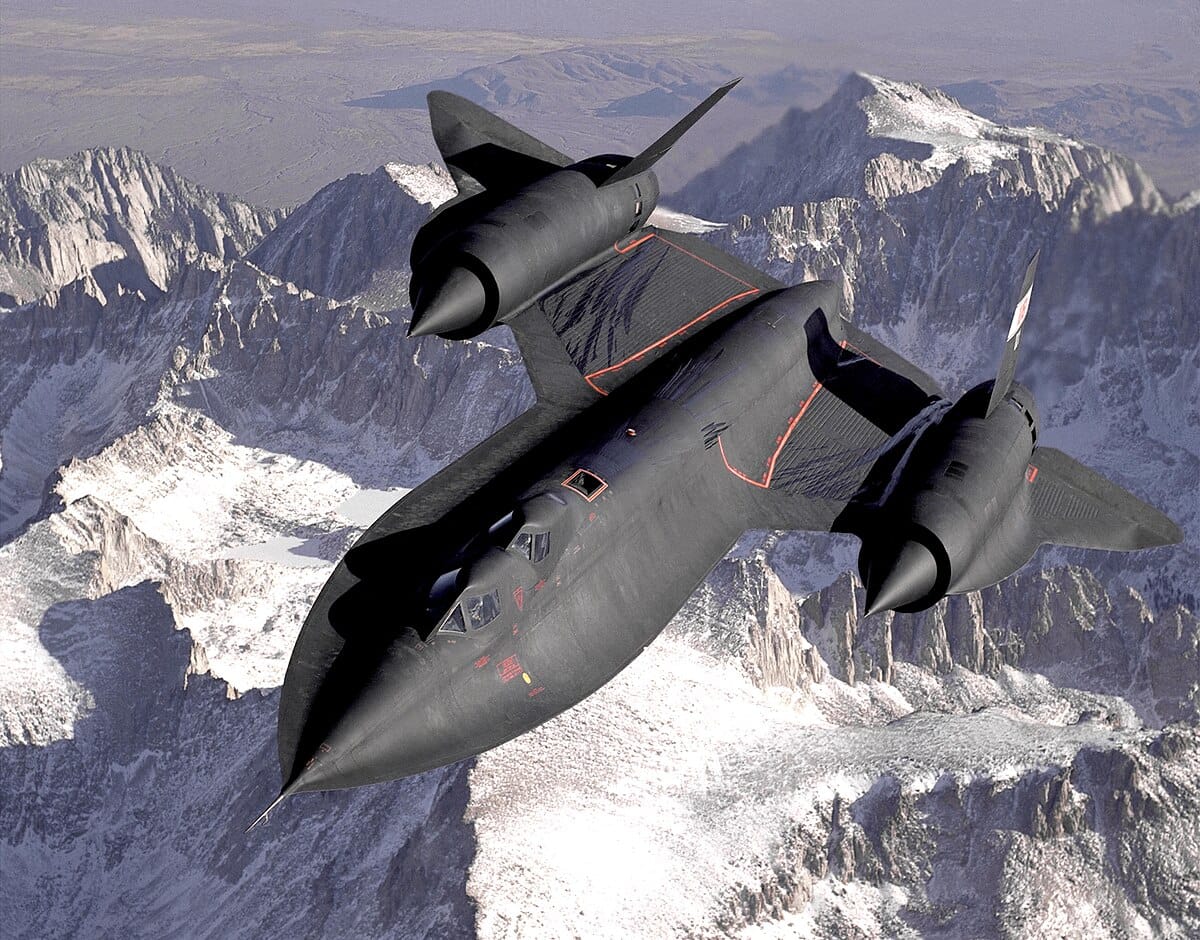
From outside the envelope, such systems look impossible. From inside it, they look merely ambitious.
The same logic applies underwater. Buoyancy radically alters engineering constraints. Ray- or manta-shaped hulls are hydro-dynamically obvious. Cavitation envelopes and ionization fronts can decouple vehicles from water entirely, producing burst speeds that appear to violate inertia.
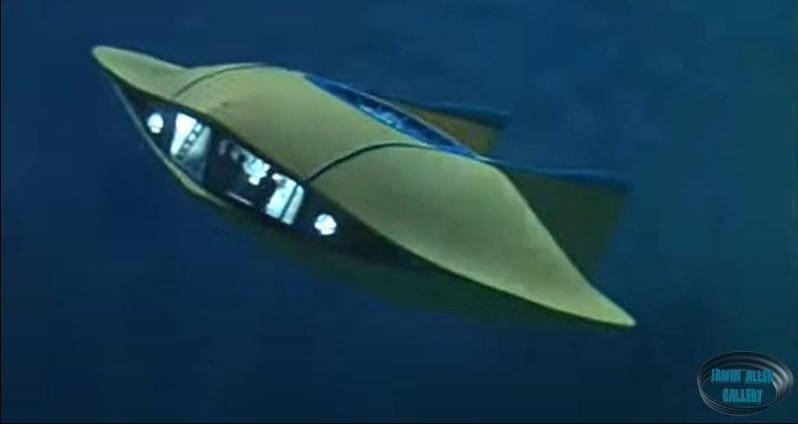
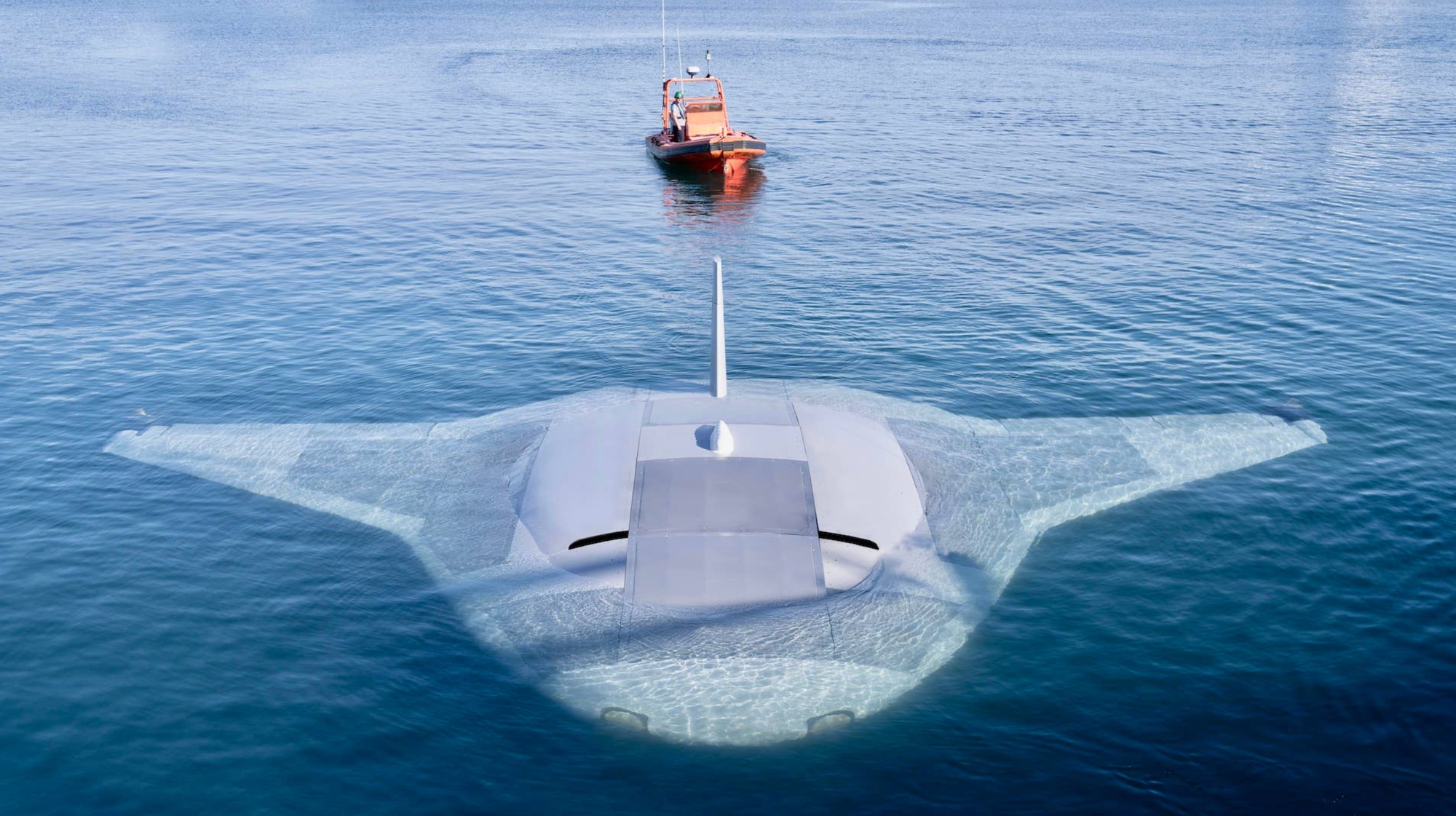
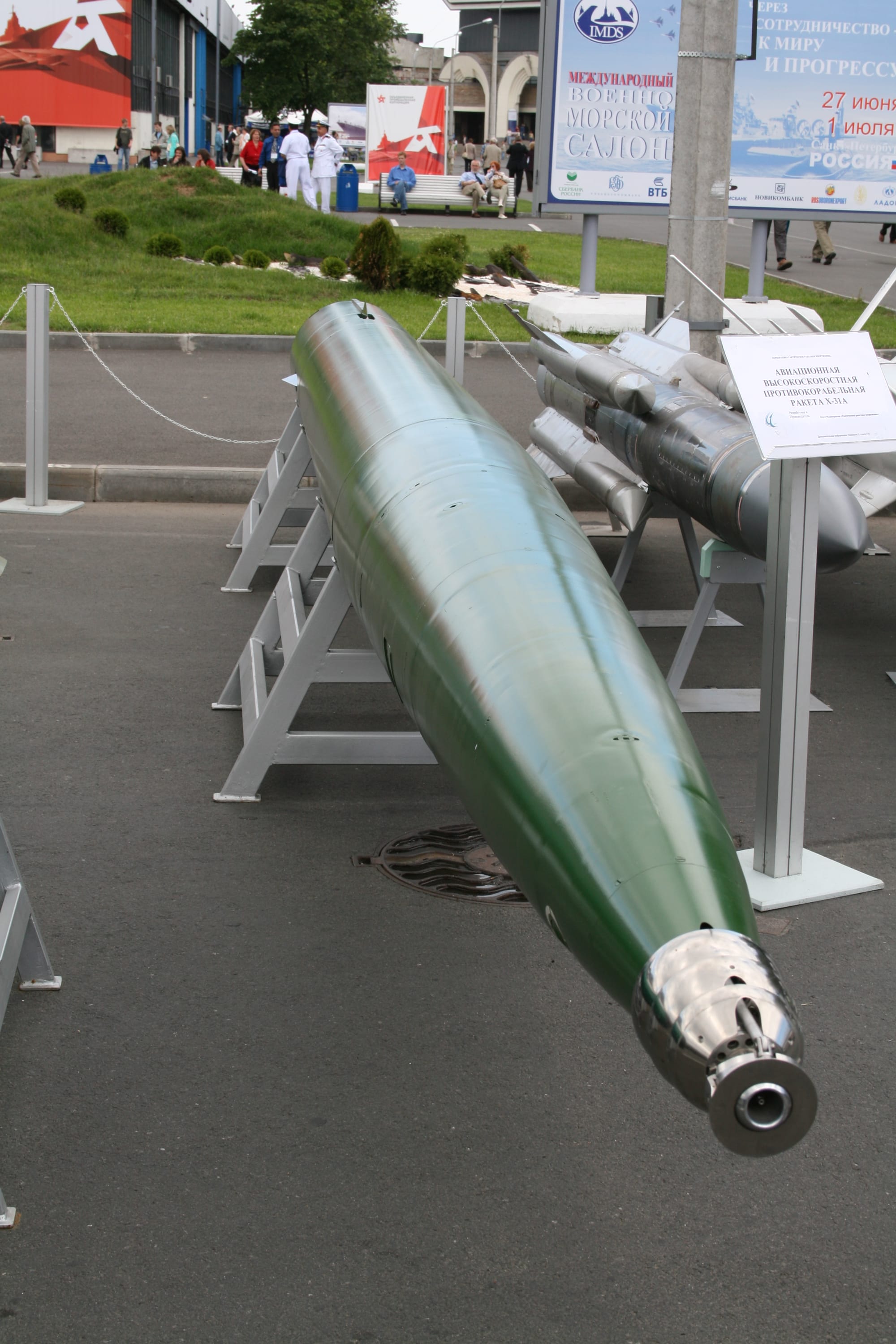
Supercavitating torpedoes already exist—Russia’s VA-111 Shkval has been operational since the late 1970s—and do exactly this: they do not so much move through water as tear a gas bubble through it. Sonar operators trained on classical hydrodynamics experience such behavior as discontinuity, as if the object has leapt rather than traveled.
Some systems work. Some fail. Failed systems are the most disturbing of all. A long-dwell platform that cannot safely re-enter, that lingers too long, flares oddly at dusk, drifts unpredictably, or requires quiet containment would look profoundly uncanny to witnesses. To engineers, it would be an embarrassment. Embarrassing failures are not disclosed; they are forgotten.
Nuclear-powered aircraft existed. They flew. The U.S. NB-36H conducted forty-seven flights between 1955 and 1957 with an operational airborne reactor carried purely to test shielding limits. Crews were irradiated because adequate protection was incompatible with flight. Airframes became radioactive. Crash scenarios were unthinkable. The program was canceled and quietly buried. Most people still do not know it happened. Expecting transparency here is more extravagant than accepting silence.

There would have been other geometries.
There are cases in which witnesses reporting odd craft suffered radiation burns or sickness, followed by helicopter containment and rapid exclusion zones. Radiation injury does not suggest other worlds. It suggests shielding failure. But once you know what humans have done to each other in secret, silence here feels incriminating, not neutral.
Technology, however, is only half the picture.
The mid-twentieth century was an ethically unbounded era of human experimentation. This is not speculation; it is historical fact. Tuskegee alone settles the question. Hundreds of Black men were deliberately left untreated for syphilis so its natural progression could be observed. Unit 731 settles it again: vivisection, frostbite experiments, deliberate infection. Cold War radiation exposure experiments followed, along with chemical testing, psychological manipulation, and biowarfare research. These programs were documented, internally justified by perceived necessity, and later minimized or erased.

The point is not that these programs succeeded. Most did not. The point is that they were tried.
If advantage was imaginable, it was explored—biological, cognitive, physiological—not because planners were mad, but because competition demanded it and ethical brakes were weak. Many of these lines of inquiry failed catastrophically. Some produced suffering, deformity, or death without yielding usable results. Such failures are the least likely to be disclosed: legally radioactive, morally indefensible, strategically useless.
Even without knowing the historical record, it is easy to imagine rare, grotesque human-scale failures and leakages that are vastly more plausible than interstellar visitation. One does not have to extrapolate very far into the logic of mutation or biological experimentation before the terrain becomes utterly abhorrent, yet still within the bounds of human capability. The historical record does not stretch this imagination — it closes the distance.
The Colares incidents of 1977–78, later formalised under the Brazilian Air Force’s Operação Prato, read less like an encounter narrative and more like a textbook case of uncontrolled experimentation at the periphery of oversight. Over many months, residents of isolated riverine and island communities reported repeated low-altitude aerial phenomena accompanied by consistent physiological effects: localized burns, profound weakness, dizziness, nausea, puncture-like skin lesions, and lingering neurological symptoms. These effects were documented by local physicians and were sufficiently serious that some victims required hospitalization. The phenomena were not fleeting; they recurred night after night, following patterns rather than producing singular shocks. The military response is the most revealing element: investigators were deployed, photographs were taken, reports were written, and then the record went quiet. No explanation was offered to the affected populations, no remediation followed, and no public accounting was made. Nothing about this sequence requires extraterrestrial intent. It requires only poorly understood or poorly controlled technology, deployed in a geographically marginal region, producing patterned harm without adequate safeguards — precisely the historical signature of experimental systems tested where scrutiny is weakest. What transformed Colares into a UFO legend was not what occurred in the sky, but the absence of any humane or credible explanation on the ground.
This history permanently contaminates interpretation. Once people know—even vaguely—that such things occurred, institutional silence no longer reads as neutrality. It reads as guilt. Mundane explanations stop landing. Exotic ones feel cleaner.
This is why cases like Varginha refuse to dissolve. Varginha persists not because it proves anything, but because it behaves badly. Multiple witnesses across social strata. Confusion rather than triumph. Military involvement without explanation. Reports of illness and death that never stabilized into evidence but never vanished either. It does not require aliens. It requires misclassification, panic, possible biological or technological failure, and silence.

Humans do not record reality; they resolve it. Under ambiguity, interpretation synchronizes socially. This is not mass lying, nor mass simultaneous hallucination. It is communicable perception. People complete underdetermined stimuli using shared templates: shapes, agents, intentions. This is why we get triangles at night, cubes inside spheres, objects that appear to change shape, and beings that appear and vanish instantly.
A being that appears and disappears without inertia is not behaving like an organism. It is behaving like a collapsed interpretation boundary. The figure stabilizes in language, not in space. This social synchronization explains much—but not all.
If that were all, the UFO subject would have died decades ago. It did not, because there is a remainder. Edge cases persist. Documentation is incomplete. Some events do not collapse neatly without forcing the fit. Not many—but not zero.
This is where bad reasoning usually begins, but it does not have to. Unresolved does not mean unbounded. Non-refutable does not mean true. Some UFO tropes cannot be logically excluded. That does not make them likely; it makes them epistemically permissible to hold with low confidence.
Belief under uncertainty is not automatically irrational. What matters is proportional confidence and openness to revision. There is also an ethical asymmetry here that debunkers often ignore: dismantling a belief that functions as psychological scaffolding can be cruel without advancing truth.
This is why extraterrestrials are comforting. When confronted with phenomena that feel impossible, opaque, or institutionally contaminated, many people reach for the alien hypothesis not because it is strong, but because it is clean. Aliens relocate agency away from us. They absolve human institutions. They avoid confronting human failure or cruelty. It is easier to imagine visitors than to accept that we are already capable of producing incomprehensible things—and then failing to explain them.
Extraterrestrials are the modern secular gods: same function, new costume.
If one considers exogenous explanations at all—explanations not generated by human systems—Occam’s razor applies differently. Agent-based explanations such as aliens, time travelers, hidden civilizations, or superbeings are ontologically extravagant. They add intent, logistics, persistence, and narrative where none are required. Interstellar visitors demand vast energy expenditure and curious behavioral restraint. Time travelers demand global violations of causality. Hidden terrestrial civilizations demand perfect concealment across millennia.
All are logically possible. All are costly.
Once these are removed, the remaining exogenous possibilities collapse into a very small class: unmodeled external degrees of freedom, weak and incidental interaction, and no narrative obligation. This is what is loosely referred to as extradimensionality—not as beings, not as realms, not as a story, but as structural incompleteness in our physical model.
This is not metaphysics. Metaphysics is unconstrained; anything can be posited and nothing priced. Occam does not apply there. Extra-dimensionality, by contrast, is constrained by geometry, symmetry, and calculability—like virtual photons, which have no direct evidence as objects but conditional legitimacy as structure.
It is not asserted. It is not evidenced. It explains nothing directly. It merely survives elimination. If such structure exists, interaction would be incidental and indifferent—more like a stirring finger in water than a visiting hand.
That is not a claim about reality. It is a constraint on imagination.
As of late 2025, the cycle intensifies again. Trailers evoke wonder and dread. Prediction markets spike on rumored declassifications. Congressional mandates demand new reporting regimes. Archival studies correlate transient anomalies with Cold War nuclear testing. Yet these waves, too, will crest and recede, leaving the same braided explanations—technological, perceptual, institutional—largely intact.
Where does this leave us? Most of UFO phenomenology is human. Some of it is technological. Some of it is perceptual. A small remainder may reflect the limits of our descriptive framework.
As the subject becomes fashionable once more, it is worth remembering that the most unsettling possibility was never that something extraordinary is visiting us. It is that we are already extraordinary enough—and not nearly as transparent, competent, or tidy as we like to believe.
At its core, this subject is not about UFOs. It is about how explanation behaves under pressure, and how humans respond when it fails to satisfy or comfort.

Discussion