
Welcome to the reformation — Part One.
Imagine you are an exceptionally intelligent individual born in the mid-17th century. You keep horses. They plough your fields and pull your carriage across your country estate. You know exactly how many horses it takes to drag a plough through stony ground. This is the world you understand—measured in hooves and harnesses.
One morning, someone shows you a machine. It’s sleek, low, and roars like thunder—a Chevrolet Camaro. You’ve never heard of combustion. No one has told you about pistons or gasoline. Yet you are asked to explain how this machine moves so quickly.
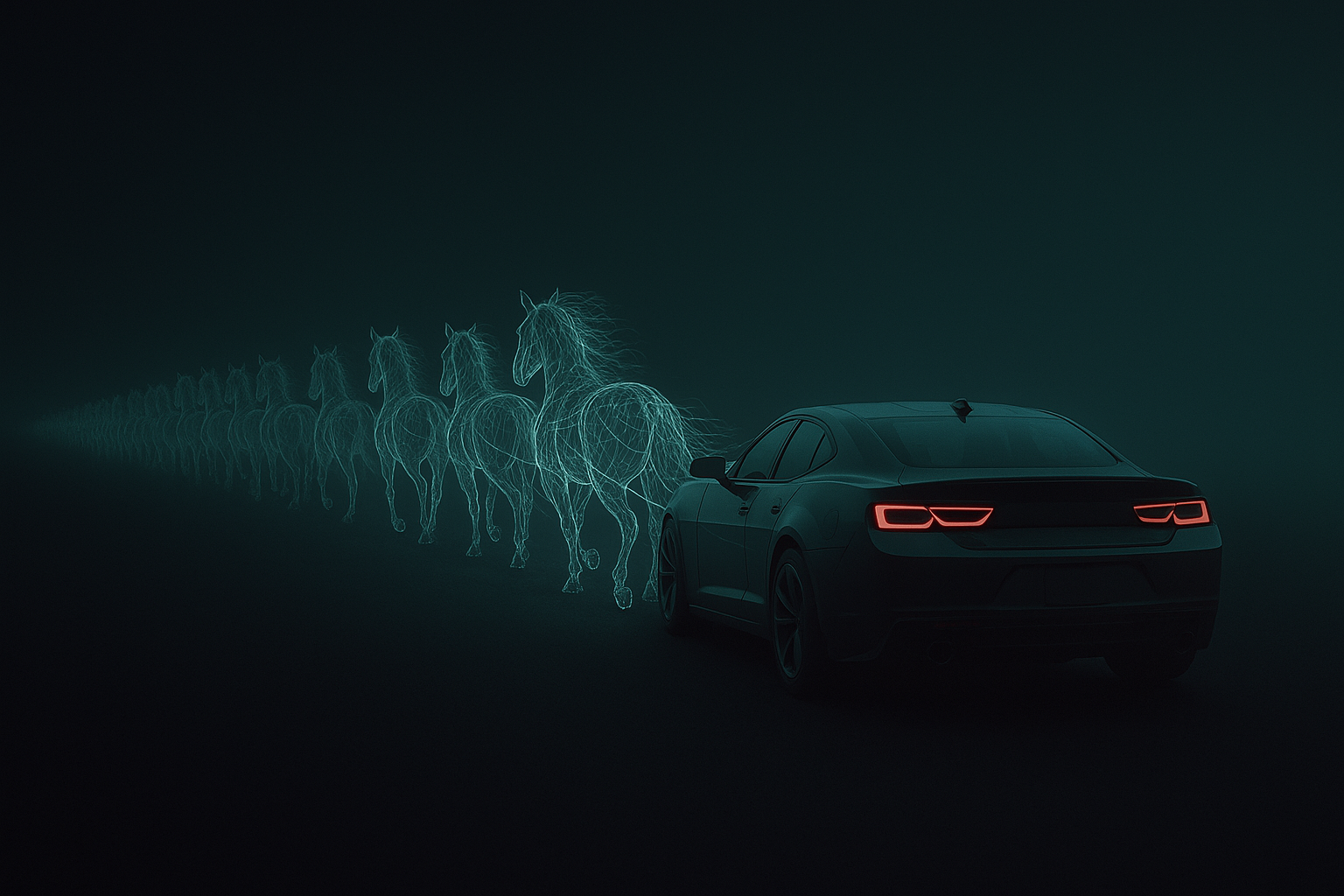
The answer is obvious: horses. Invisible ones. Silent. Impeccably obedient. Based on the weight and velocity, you calculate that two hundred and fifty horses must be harnessed to the front of the car. They never eat. Never tire. Never leave manure on the road. But they must be there. The math says so.
And the math works. You can predict exactly how many invisible horses are needed to make the car go faster. You publish. You are praised. You win awards.
Now—another century.
It’s the early 19th century. Someone discovers electricity. It spreads like fire—fast, bright, powerful. At first, it seems to ripple through the air like lightning. You give its carrier a name: particles of light—photons. It fits. You become the godfather of electrical light theory.
Then someone builds a vacuum—a glass jar with nothing inside. Yet electricity still arcs. No air. No medium. But your equations still work. So you adjust. The photons must be virtual now. Invisible, impossible to capture—but still necessary. They have to be.
You warn that they may not exist. But no one listens. The lights come on. Civilization hums. The math is perfect.
Only the photons are not real. They were invented to rescue the model. And over time everyone forgot the caveat.
One more leap.
You're a modern scientist. You've studied for fifteen years—Einstein, Schrödinger, Bell, Hawking. Your field? Gravity. Your equations predict the motion of galaxies to astonishing precision. The model is immaculate. The assumptions—untouchable.
Then a new telescope is built. It measures the light from distant galaxies, redshifted by motion. The farther away they are, the faster they appear to flee—a galactic Doppler effect. The math still works. But something is missing.
The galaxies are moving too fast. There isn’t enough mass. Or energy. Your answer? Dark energy. Invisible. Undetectable. Silent. But necessary—because the equations are perfect.
Or are they?
What’s broken? The formula? No—the formula is flawless. It produces the right answers. Then perhaps… the assumptions?
But to question them is dangerous. As dangerous as it ever was.
The world is not flat—heresy.
The Earth moves around the Sun—heresy.
Time is not real? Now we’re talking.
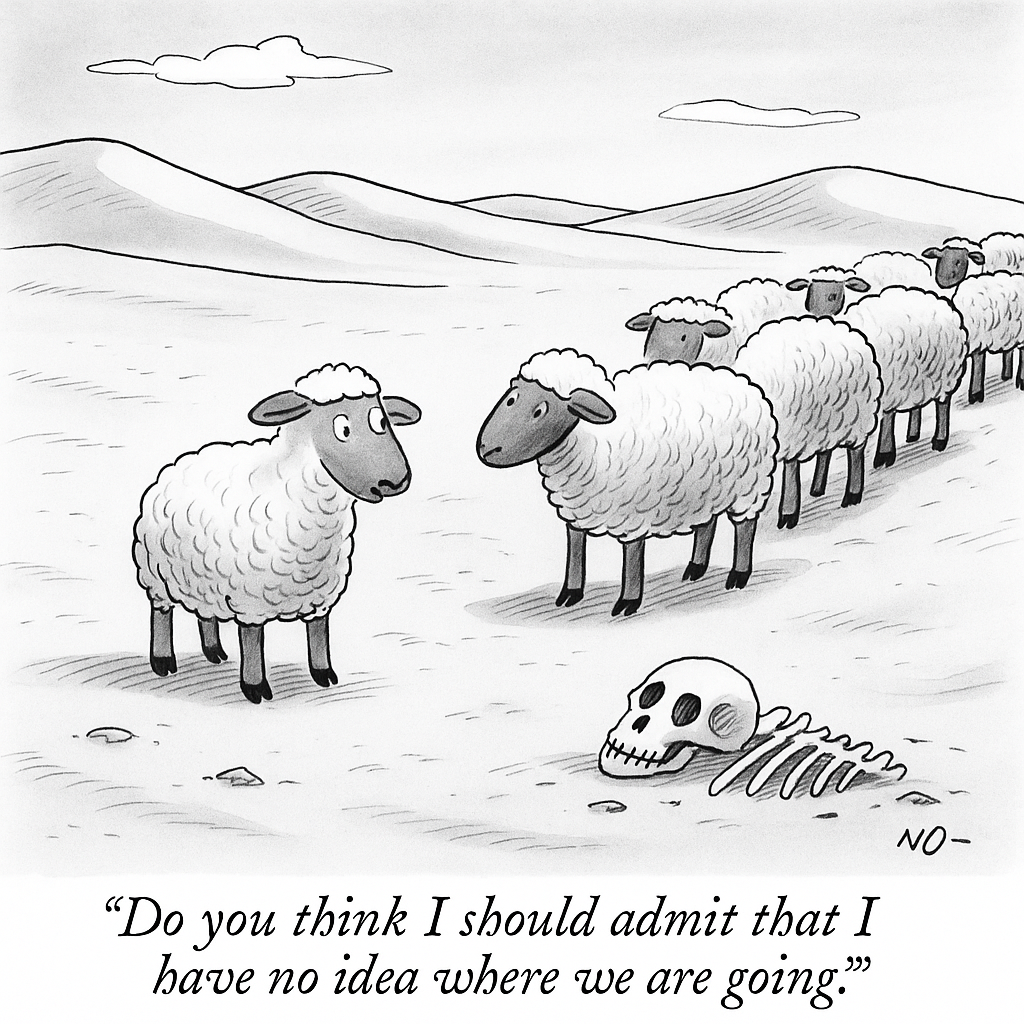
This book is a guiding hand into a heretical landscape. It is written for anyone with an enquiring mind. You do not need a diploma. You do not need permission.
Many years ago, Stephen Hawking wrote A Brief History of Time. It is a remarkable book—brilliant, courageous, essential. Yet in decades of asking, I have never met a single non-physicist who claims to truly understand it.
Not because the language is difficult. It isn’t. Not because the diagrams are poor. They’re excellent. But because certain concepts, once exposed, do not make sense.
This is not Hawking’s fault. It is the fault of physics built on perfect numbers wrapped around broken explanations. To describe such a universe, he was forced to rely on invisible gears, untestable forces, and mathematical placeholders too sacred to touch.
This book does something different.
A critique without an alternative is laziness. A dismantling without reconstruction is vandalism. So yes, a large part of this book tears away old assumptions—but it would be cowardly not to attempt replacements.
The challenge is that the rot runs deep. Replace one broken axiom and a dozen others collapse with it. The moment you stop assuming that time is a physical entity, the entire cosmos rearranges itself. Many paradoxes evaporate. Many infinities shrink. And a startlingly simple universe emerges—one that does not require invisible horses or virtual photons to function.
To be honest, the moment you stop assuming that time is a physical entity, the entire cosmos rearranges itself.
This book is not exhaustive. It cannot be. If it were, it would be a thousand pages long and take a lifetime to write. I have been selective. Faced with a choice between a topic that is simple and one deeply entangled, I choose the entangled one. The hardest cases offer the fairest test of a new framework. Simpler ones can follow.
This book is not easy. But it is simple.
What’s wrong with modern physics? Two words: axioms and specialization.
Think of an oak tree. The trunk and main branches are foundational axioms—things taken to be unquestionably true. The leaves? That’s modern physics: thousands of brilliant minds working tirelessly on ever finer details. But the trunk is never questioned.
Today’s axioms are inherited from Einstein and the other great illuminates. They are accepted, not re-examined. To question them as a student risks ridicule—or worse, expulsion. So most never do.
All modern scientists study the leaves. Very few possess the cross-disciplinary reach—or the institutional permission—to question the structure beneath. Trillions of dollars are spent on leaf analysis. Careers are built, Nobel Prizes won, predicting how those leaves bend in the light.
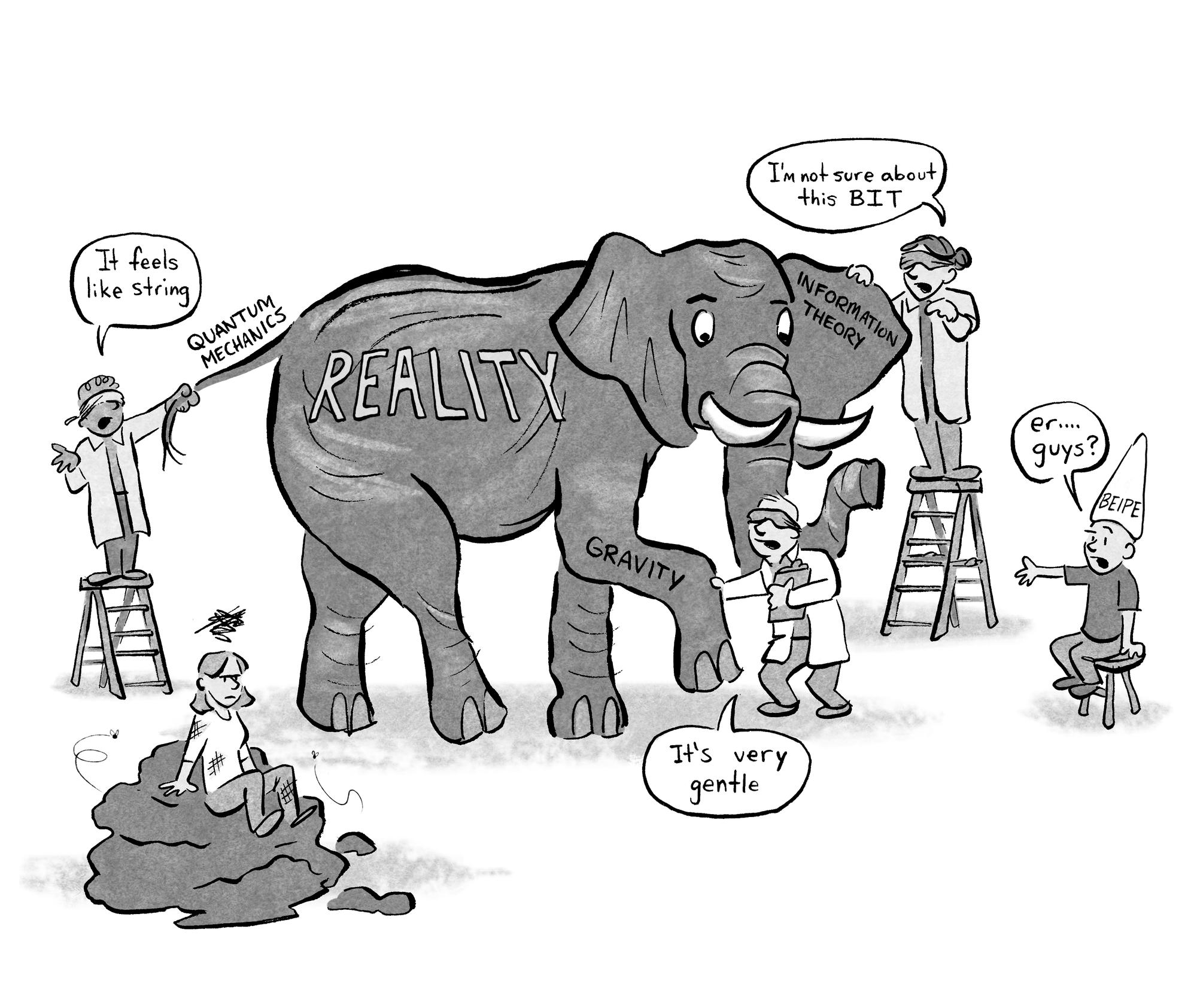
There is no funding in trunk analysis. But there is risk.
Part of this is academic protectionism. Like any expert, a physicist builds their name in a specific field. A theory becomes a career. From that point, the task is to refine it, publish within it, and defend it. This is how science stabilizes—it breeds robustness. But it also breeds stagnation.
This book may be the first time anyone has told you the truth about physics—about what the universe is, and about what you may be.
In the early 16th century, the Catholic Church controlled the Bible—not its content, but its language. Only those who spoke Latin could debate the nature of God. The priesthood controlled the conversation. The result? A free rein of invention.
One invention was indulgences—payments made for sins not yet committed. Buy your forgiveness ahead of time. Theologically hollow, institutionally perfect.
This drove Martin Luther to act.
He was devout. He confessed obsessively. He exhausted priests. But the day he translated the Bible into German, he made a breathtaking discovery: indulgences did not exist. They were invented.
The Reformation began—not with fury, but with clarity.
Once you decipher modern physics, you discover it too is padded with indulgences—fudged numbers, invented infinities, particles never observed, dimensions never touched.
Why? Not because nature demands them— but because the assumptions do.
We have spent a century building elaborate machinery to preserve a framework we are no longer allowed to question.
But there is a new Luther in town.
Not me—artificial intelligence.
There is a new Martin Luther in town — Artificial Intelligence
AI cannot tell you whether invisible horses exist. But it can reveal exactly where they are smuggled into the equation, what role they play, and why they were added. It can separate precision from understanding. It can expose where beautiful mathematics conceals a missing mechanism. For the first time in history, we possess a tool capable of examining every assumption at once.
From there, dissection becomes human.
We decide what to keep.
We decide what to let go.
Welcome to the Reformation.
Ed. The above is an amended extract from my forthcoming popular science book “Reality — a reformation of physics without indulgences or imaginary friends.” In the next newsletter, we turn to Time: what it is, and whether it exists… at all.
Discussion